

SRINAGAR, JULY 31: Jammu and Kashmir police have arrested 1,416 individuals and registered 1,032 cases under the Narcotic Drugs and Psychotropic Substances (NDPS) Act this year so far.
Law enforcement agencies seized 1,388 kilograms of illicit drug substances and over 62,000 psychotropic tablets.
Additionally, 181 cases under the PIT-NDPS Act were registered, resulting in the apprehension of 58 key drug traffickers through thorough backward and forward link investigations.
Furthermore, 220 drug hotspots were identified, including 20 newly identified areas, of which 33 hotspots had been dismantled. A total of 413 arrests were made in these areas. Likewise, the property attachment actions were taken in 45 cases, involving 35 buildings and 13 vehicles linked to the drug trade. Assets worth Rs 39 crore were frozen or seized, with relevant entries recorded in land revenue documents, the meeting was informed.
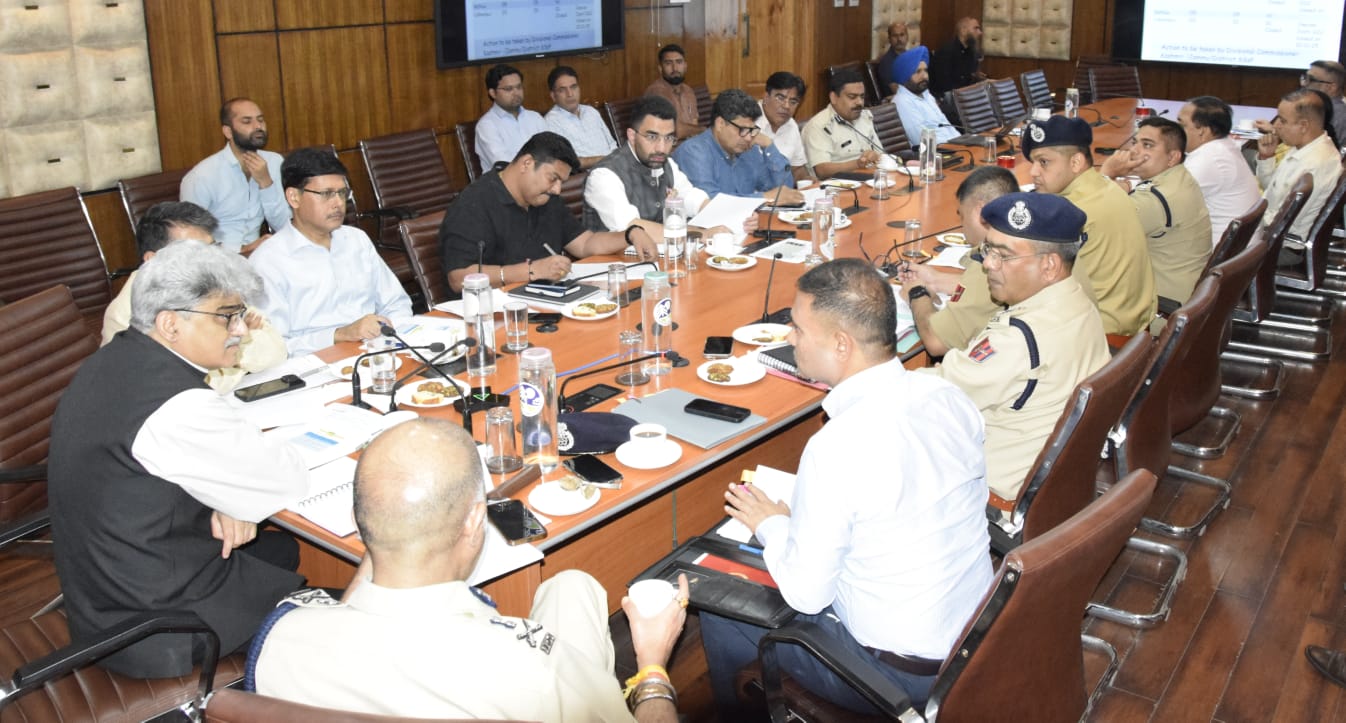
The details were shared by Inspector General, Crime, Sujit Kumar, in the 14th UT-level meeting of the Narco Coordination Centre (NCORD). The meeting was chaired by Chief Secretary, Atal Dulloo, to assess the ongoing efforts to curb the menace of narcotics trade and substance abuse across the districts of J&K.
The meeting was attended by Additional Chief Secretary, Higher Education Department; Director General of Police (DGP); Additional Director General of Police (ADGP), CID; Principal Secretary, Home Department; and other senior administrative heads and police officials while Deputy Commissioners (DCs) and Senior Superintendents of Police (SSPs) from across the UT participated virtually.
Taking strong note of the seriousness of the issue, the Chief Secretary underlined the critical role of comprehensive investigations in Narcotic Drugs and Psychotropic Substances (NDPS) cases, stating that the quality and timeliness of investigations directly influence the success of prosecutions and outcomes in courts. He emphasized the need to strengthen the investigation process to ensure effective judicial disposal of cases.
The Chief Secretary also reviewed the long-pending NDPS cases and directed the concerned officers to identify the underlying causes of delay and initiate necessary corrective measures. He called upon the Police Department to submit monthly status reports on NDPS cases, clearly indicating the progress in investigation and prosecution, along with the age and stage of each pending case.
Reiterating the government’s zero-tolerance policy against narcotics, the Chief Secretary urged all stakeholders to adopt a coordinated, proactive, and multi-pronged approach to root out the drug menace from the length and breadth of the UT.
. The Chief Secretary directed that all bail and acquittal cases should be jointly analysed by the Law and Police Departments to identify the potential gaps or lapses in the investigation and prosecution processes.
Addressing the need for a robust drug de-addiction infrastructure, the Chief Secretary reviewed the availability of treatment facilities across the districts. He instructed the Health Department to augment inpatient de-addiction services in Government Medical Colleges and District Hospitals to reduce dependence on private facilities. He also called for enhancing the capacities of the medical and paramedical staff at the Institute of Mental Health and Neurosciences (IMHANS) to expand the outreach of services across health institutions.
During the meeting, Director General of Police, Nalin Prabhat, highlighted the importance of pooling all available human and material resources to comprehensively tackle the drug problem. He emphasized the need for fast-tracked, high-quality investigations and also flagged the misuse of courier services for trafficking Schedule-I drugs, suggesting some stricter surveillance and control measures.
Principal Secretary, Home Department, Chandrakar Bharti, in his presentation, shared insights on the data available on the NCORD portal. He called upon the DCs and SSPs to convene regular district-level NCORD meetings. He asked for the timely uploading of meeting agendas, minutes, and action-taken reports. He also presented a detailed district-wise status of NDPS cases, including those under investigation, challaned, or pending in courts.
The Chief Secretary was also apprised of the extensive awareness campaigns and IEC activities being undertaken by various departments in coordination with the Police. Notably, technological interventions such as Aadhaar-linked monitoring and dedicated portals for tracking drug prescriptions and patient intake have been decided to be developed with the assistance of BISAG-N to prevent diversion and misuse of prescription drugs for illegal purposes.