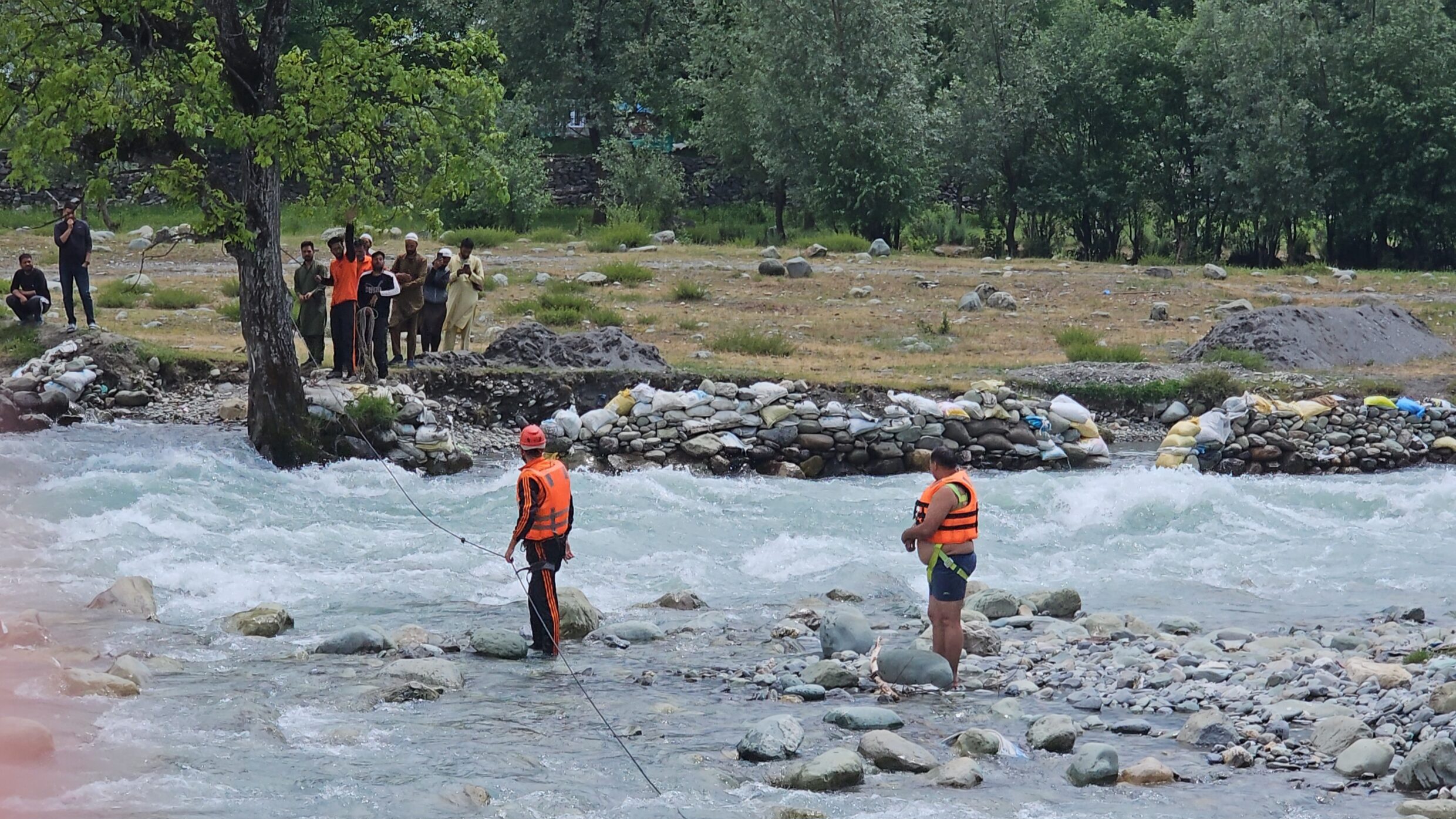
Authorities across several districts in Jammu and Kashmir have enforced a ban on swimming and bathing in several water bodies, including Nallah Sindh and its adjoining tourist spots, including Wayil, Mammer, Gagangeer, Hung, and Sonamarg. The step has been taken to prevent mishaps linked to the forceful currents and deep waters that these streams carry. Similar restrictions have been extended to Rajouri and Tral, where swimming, bathing, fishing, and loitering near rivers, nallahs, and waterfalls have been disallowed. The aim is to reduce the growing number of drowning incidents that have left families devastated during the summer season. Despite these curbs, a tragic incident took place in north Kashmir’s Bandipora district, where a 24-year-old man drowned in Papchan Nallah on Friday. Rescue teams rushed to the spot and retrieved the body after hours of effort, but doctors at the district hospital declared him dead on arrival. What makes the case more distressing is that the local administration had issued a warning just a day earlier, cautioning people to stay away from streams due to swelling water levels. Such accidents underline the risks posed by fast currents, deep pools, and slippery banks that make these water bodies unsafe, even for those familiar with the terrain. To minimise these dangers, officials are deploying tourist police, putting up warning boards, and conducting awareness campaigns to inform visitors and residents about the risks. Local authorities, including police and village-level representatives, have been directed to remain alert and discourage unsafe activities around water bodies. In Rajouri, even school and college excursions near rivers now require prior approval from the administration. These measures show the seriousness of the threat and the need for constant vigilance. People visiting Kashmir’s rivers and streams, particularly during summer, are being advised to exercise extreme caution. Tourists are urged to avoid entering these waters without trained guidance or proper safety equipment, like life jackets. Parents have also been told to closely supervise children near such places, as curiosity and negligence can quickly turn into tragedy. While bans and advisories around rivers and streams are necessary to protect lives, they also highlight how little attention has been paid to creating safe spaces for people to swim and enjoy water-based recreation. In all parts of the Valley, including Srinagar, there is not a single government-run or public swimming pool where people can practise swimming under supervision and in controlled conditions. The few pools that exist are either inside high-end hotels or privately managed facilities, charging amounts that are far beyond the reach of the average family. This leaves young people with no choice but to turn to rivers, streams, and lakes, which are both dangerous and unpredictable. If safe and affordable swimming facilities were available, the risk of drowning incidents could be drastically reduced. Building such infrastructure is not just about leisure; it is about providing safe alternatives that protect lives, especially during the summer when children and youth are naturally drawn to water bodies.
Unsafe Waters