

Darakshan Hassan Bhat
What does it truly mean to listen to women? What does it mean to listen to young girls who have grown up in a society shaped by turbulence, social restrictions, generational challenges, and complex circumstances? Is listening merely about hearing their words, or does it mean understanding their aspirations, acknowledging their struggles, respecting their choices, and providing them with the opportunity to express themselves freely?
These questions need serious consideration, both inside and outside our homes and families. First, we often fail to provide a girl child or a woman with the space to speak up, offer suggestions, and participate in ordinary discussions that help develop leadership qualities.
Here, I am reflecting on the fact that women and young girls in Kashmir have stories that often remain unheard. Behind every successful woman, there may be years of struggle, sacrifice, determination, and resistance against circumstances that have attempted to limit her potential. Behind every young girl who dreams of becoming a doctor, an administrator, a sportsperson, a journalist, an entrepreneur, or a leader, there may be a family, a community, or a social environment that has not always encouraged her aspirations.
These are the lived realities of our society. Kashmiri women have also experienced difficult periods in their social history. The prolonged conflict, radical ideologies, social conservatism, and restrictions on individual choices have affected their opportunities and participation in different spheres of life. For many years, certain professions, independent lifestyles, and educational aspirations were discouraged or viewed with suspicion. Women and young girls faced challenges in pursuing their dreams, making independent decisions, and participating freely in public life.
Despite these problems and societal barriers, Kashmiri women have continued to demonstrate remarkable courage and perseverance. From Lal Ded, Habba Khatoon, and Arnimal to contemporary women excelling in education, administration, sports, journalism, entrepreneurship, politics, and the creative arts, Kashmir has a rich legacy of women who have contributed to its cultural and social identity. Today, young girls are breaking barriers, representing Jammu and Kashmir at national and international levels, and demonstrating that talent and determination are not restricted by gender or geography.
Girls and women who have struggled and have overcome financial hardships or social pressure. A young woman who chooses an unconventional profession may have struggled to convince her family or community. A woman who speaks about her experiences may be carrying the emotional burden of years of silence. Their stories deserve our attention, not merely our applause.
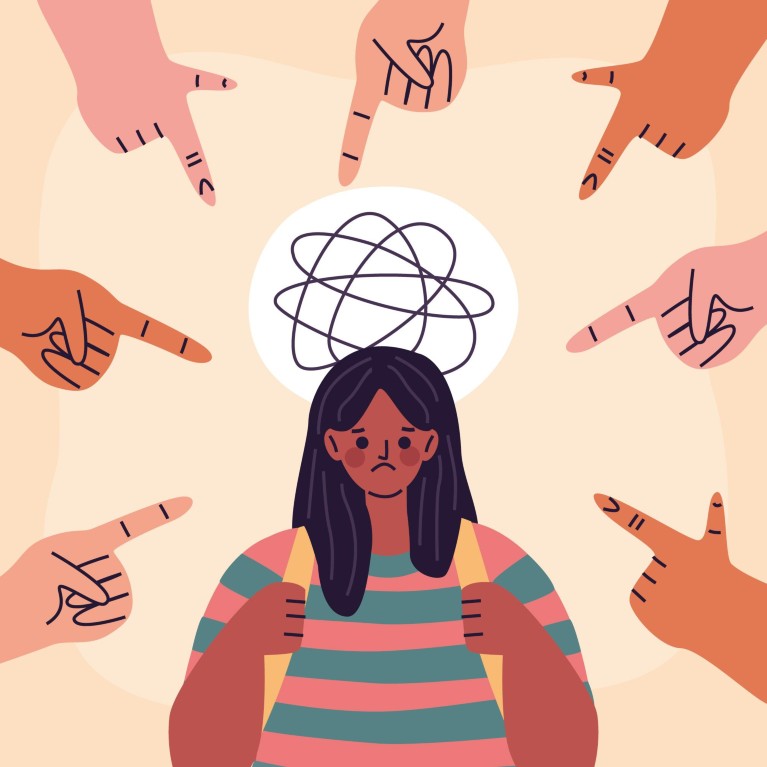
When a girl is not allowed to express her views, when her aspirations are dismissed without consideration, or when her voice is interrupted simply because she is young or a woman, we must ask ourselves whether we are unintentionally perpetuating another form of discrimination.
Discrimination is not always visible. Sometimes, it exists in the silence we impose, the opportunities we deny, the opinions we disregard, and the conversations in which women are present but not genuinely included. Listening to women should not be treated as an act of sympathy or a favour. It is a matter of dignity, equality, and social responsibility. A woman does not need permission to have an opinion, and a young girl should not have to prove her worth before her voice is respected.
When we listen to women, we begin to understand the realities of their lives. We discover their aspirations, their fears, their achievements, and the barriers that continue to stand in their way. When we listen to young girls, we gain insight into the future they wish to build. Their dreams may challenge our traditional understanding, but that should encourage us to reflect rather than reject them.
The responsibility of encouraging women cannot rest solely upon women themselves. Families, educational institutions, civil society organisations, government institutions, community leaders, and intellectuals must collectively create an environment where girls feel confident enough to speak without fear of judgment.
We must encourage them to share their experiences, participate in discussions, express their opinions, and take leadership roles. Their voices must be included in decision-making processes that affect their education, employment, safety, health, and future.
In Kashmir, where the narrative of women has often been shaped by conflict, victimhood, and social restrictions, it is particularly important to recognise women as individuals with independent identities, ambitions, and capabilities. They are not merely survivors of difficult circumstances; they are contributors, decision-makers, innovators, and builders of a progressive society.
The emerging generation of Kashmiri women deserves an environment where their achievements are celebrated, and their concerns are sincerely addressed. We must create opportunities for every woman and young girl, regardless of her background or circumstances, to express herself with confidence. Every voice matters, and every experience has value.
Truly listening to women means respecting their individuality, recognising their aspirations, and ensuring their meaningful participation in society. If we aspire to build a peaceful, progressive, and inclusive Kashmir, we must give women and young girls the freedom, confidence, and opportunity to decide what they want to become. Let us not merely celebrate their voices; let us build a society where they are heard, respected, and empowered.