

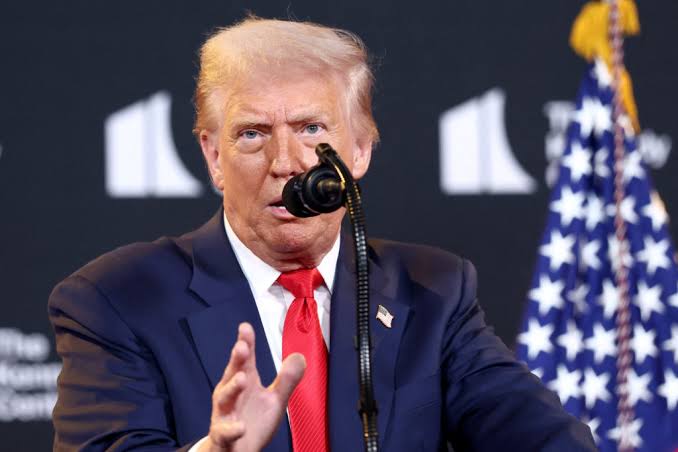
New Delhi, September 20 — In a move that could hit thousands of Indian professionals and the country’s information technology industry, U.S. President Donald Trump has signed a proclamation imposing an additional USD 100,000 (around ₹83 lakh) fee on companies sponsoring workers under the H-1B visa programme. The order will take effect from September 21 and remain in force for a year unless extended.
The White House justified the measure as a step to stop the “abuse” of the H-1B system, which it claims has displaced American workers and posed national security risks. Under the new rules, any U.S. employer hiring a foreign worker from outside the country will have to pay the extra sum for the petition to be approved.
The order is expected to have its sharpest impact on India, which accounts for nearly three-quarters of all H-1B visas issued each year. For India’s IT services giants such as TCS, Infosys, Wipro and HCL Tech, as well as hundreds of mid-sized outsourcing firms, the steep fee represents a significant new cost. Executives warn that the change could force companies to cut back on sending staff to the U.S., rework project costs, or shift more work offshore.
Industry experts said the measure will also affect individual professionals and start-ups. “For a mid-level engineer or consultant, a fee of ₹83 lakh is simply prohibitive. Smaller firms will think twice before sending talent to the U.S.,” said an industry analyst in Bengaluru.
The Indian government is closely watching developments, as the new restriction comes at a time when mobility of skilled workers is a sensitive issue in bilateral trade and technology ties. Officials fear the move could strain cooperation in sectors such as digital services, innovation and higher education, where Indian talent plays a key role in the U.S. economy.
While Washington argues that the fee will protect American jobs, critics in both countries believe it could weaken U.S. competitiveness in industries that depend on skilled migrants. Immigration lawyers in the U.S. have also warned of legal challenges, adding to the uncertainty for thousands of Indian workers and their families.
For now, Indian professionals dreaming of a career in America may find the world’s most coveted work visa far harder and costlier.