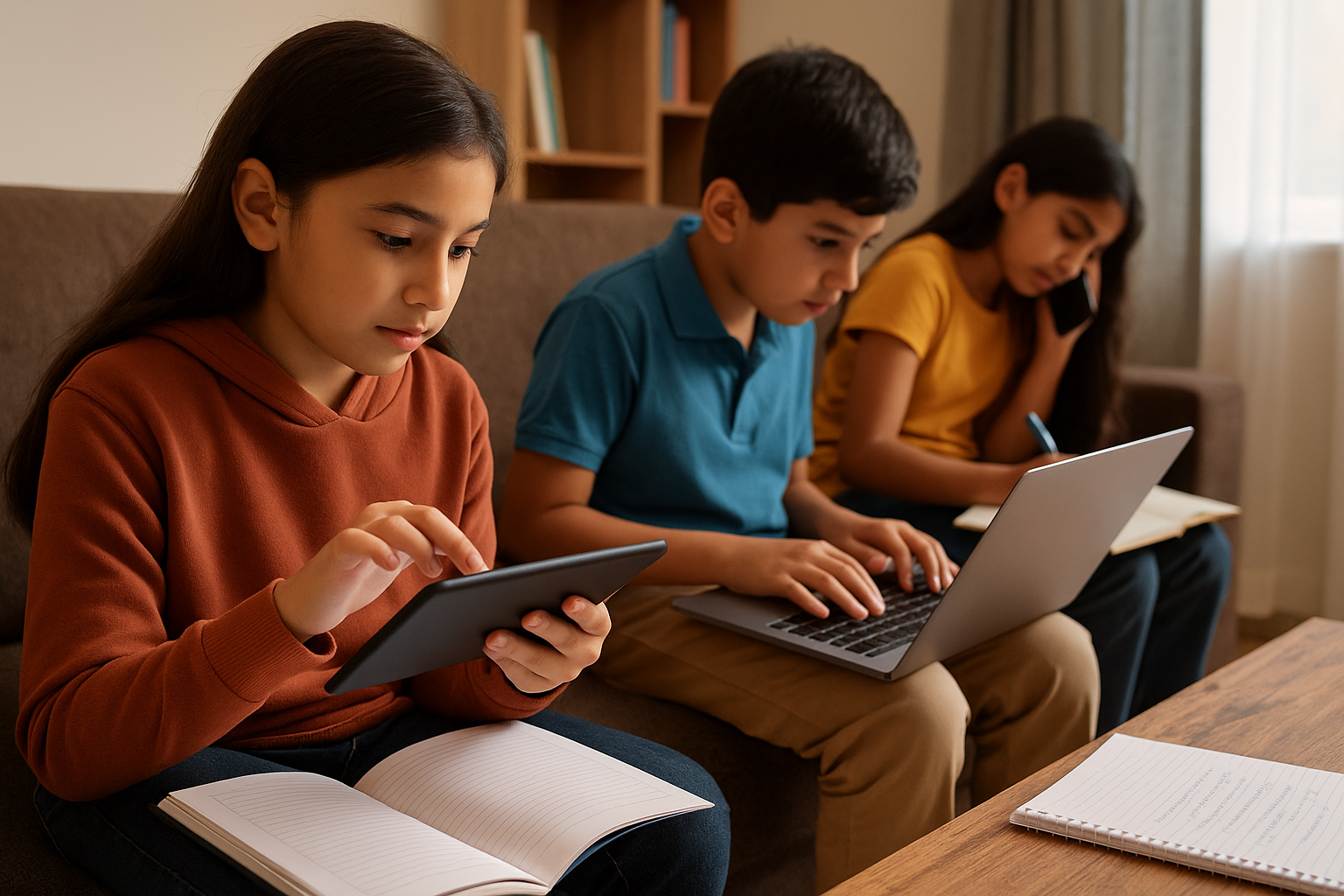
Access to technology-based learning at home has become increasingly important for school students as it shapes the way they learn, practice and explore beyond the classroom. With devices such as laptops, tablets, or smartphones paired with a reliable internet connection, students can supplement school lessons with interactive materials, online exercises, videos and educational apps. This not only reinforces concepts but also accommodates different learning styles and allows students to study at their own pace, benefiting those who need extra time as well as those who are ready to progress more quickly. In Jammu and Kashmir, the Ministry of Education’s recent report shows that 64 per cent of students have no access to technology-enabled learning at home. Only 36 per cent have a laptop, desktop, or tablet for learning, and while 60 per cent use smartphones, an equal proportion have internet access at home. The report also reveals that 66 per cent of schools have internet connectivity and 62 per cent have computers or tablets for students. It stresses the need to improve access to personal learning devices at home and to integrate digital tools more effectively in classrooms. Upgrading technological infrastructure, particularly in government-run schools, is seen as essential for creating a more supportive learning environment. Technology expands students’ exposure to areas that may not be covered extensively in school, such as coding, digital design, or foreign languages. It can make lessons more engaging by bringing real-world experiences into the classroom—whether through virtual science experiments, 3D geography visualisations, or mathematical simulations. It also equips students with digital literacy skills that are becoming as important as reading and writing, enabling them to navigate online platforms with responsibility and efficiency. However, having access to devices and internet is not enough on its own. Proper guidance from parents and teachers is necessary to ensure that students use technology for meaningful learning rather than getting distracted. Without such direction, the disparity between those who have these resources and those who do not could grow wider, leading to unequal academic outcomes and limited future opportunities. Technology at home offers the potential to make learning more engaging and versatile, but its true benefit depends on both availability and proper use. Bridging the gap in access to technology for students requires a combination of providing resources and building the right environment for their use. Ensuring that every household has at least one functional device for learning, along with affordable and reliable internet, is the first step. Government schemes, school initiatives and community-based programmes can help distribute devices to students who cannot afford them. Schools can also make their computer labs accessible beyond regular hours so that children without home access can still benefit from digital resources. While increasing access is essential, it must be balanced with measures to prevent overuse and dependency on screens. Parents and teachers play a central role in guiding students towards using technology purposefully. Setting clear boundaries for screen time, encouraging offline hobbies, and integrating regular physical activity into daily routines can help keep usage healthy.
Tech Access