

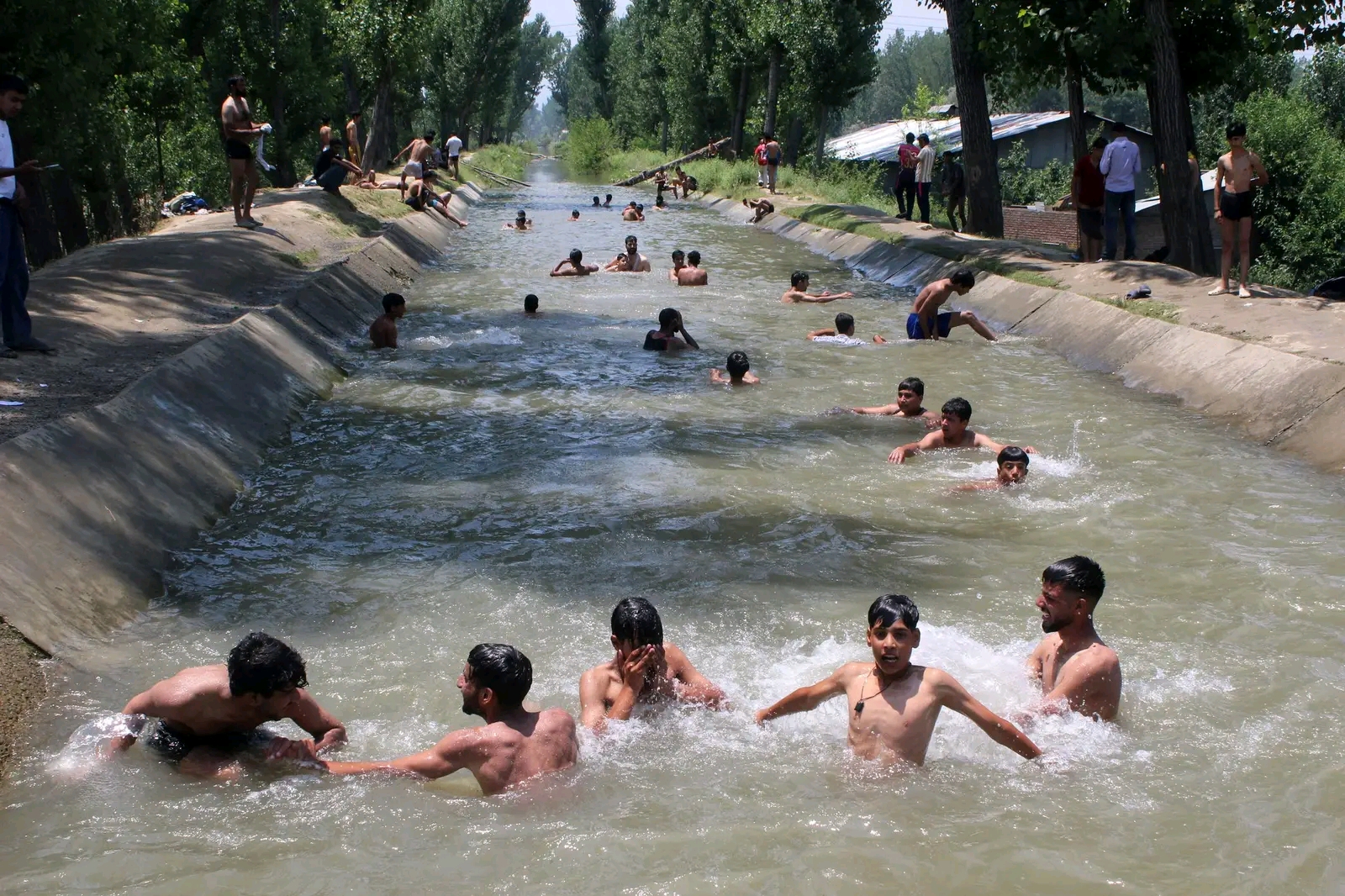
Srinagar: Kashmir Valley continued to reel under intense heat on Friday as Srinagar recorded the highest daytime temperature of the season so far at 35.0 degrees Celsius, surpassing the previous monthly high of 34.5°C recorded on July 10.
The temperature is also the third-highest July maximum recorded in Srinagar since 2016, behind 37.4°C on July 6, 2025, and 36.2°C on July 29, 2024, as per the official MeT records.
According to the Meteorological Department here, the summer capital’s maximum temperature was 4.9°C above normal, while the minimum settled at 22.0°C, also 3.3°C above normal, indicating persistently warm nights.
Among other stations, Jammu remained the hottest in J&K at 35.8°C, followed by Srinagar and Kupwara at 35.0°C each. Qazigund recorded 33.2°C, Kokernag 32.9°C, Bhadarwah 31.5°C, Katra 31.8°C, Banihal 30.8°C, while Pahalgam and Gulmarg registered comparatively cooler temperatures of 27.4°C and 25.6°C, respectively.
The weather department told GNS that hot and humid conditions are likely to persist on July 18, with the possibility of brief thundershowers at scattered places.
From July 19, the weather is expected to undergo a significant change, with rain and thundershowers forecast at many places. The IMD has predicted heavy rain and brief intense showers at isolated places in Jammu Division on July 19.
A more active spell is expected between July 20 and 22, when generally cloudy skies and widespread rain or thundershowers are likely across Jammu and Kashmir. The department has warned of heavy to very heavy rainfall at a few places in Jammu Division, while some districts in both divisions may witness intense showers and torrential rain.
Rain and thundershowers are expected to continue at many places on July 23, followed by brief spells of rain at isolated places on July 24 and 25.
The IMD has issued an advisory warning of the possibility of flash floods, landslides and mudslides in vulnerable areas during July 20–22. It also cautioned that heavy rainfall could cause a significant rise in water levels in rivers and streams, leading to waterlogging and minor flooding in low-lying areas.
Farmers have been advised to suspend agricultural operations during the period of heavy rainfall, while the general public and concerned departments have been urged to remain vigilant and plan activities accordingly.