

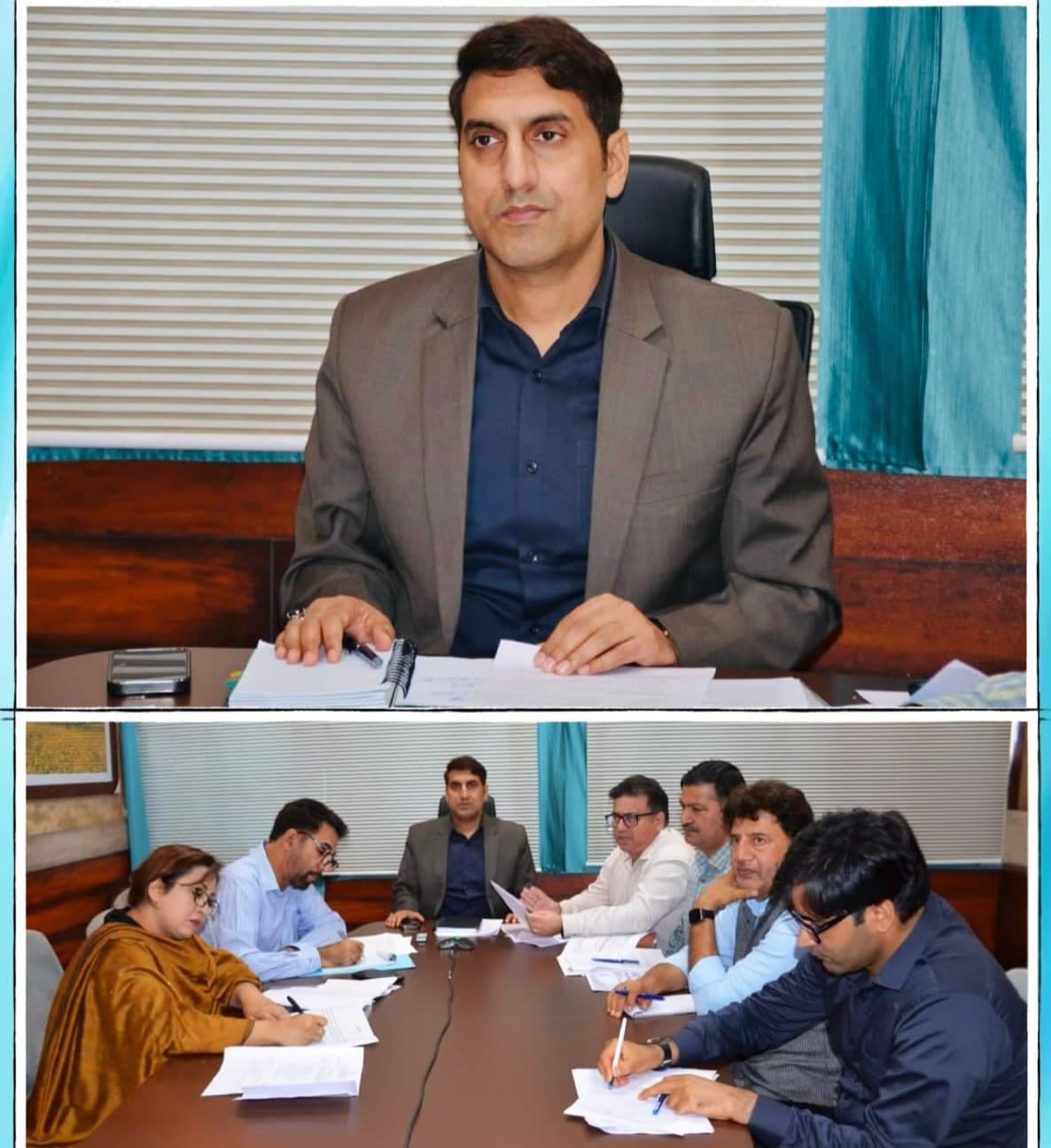
SRINAGAR, AUGUST 28: Secretary, Rural Development and Panchayati Raj (RDD&PR), Mohammad Aijaz Asad, today chaired a high-level review meeting to assess the progress of the Swachh Bharat Mission-Gramin (SBM-G) in Jammu and Kashmir.
The meeting reviewed key issues including the status of AIP 2025–26, functionality of SBM-G assets, transition of non-ODF+ villages to ODF+ model villages, IHHL construction gaps and pending citizen applications, progress under GOBARdhan, and preparations for Swachh Survekshan Grameen (SSG) 2025 and the rollout of SBM-G 3.0. The meeting was attended by DG Rural Sanitation, Anoo Malhotra; Directors RDD Kashmir and Jammu, Shabir Hussain Bhat and Shehnaz Akhtar; Director Panchayati Raj, Sham Lal; Deputy Secretary, Tahir Ahmad Magray; Superintending Engineers REW Kashmir and Jammu; ACDs, ACPs, BDOs, and Executive Engineers REW, among others.
Reviewing the pace of tendering and allocation of sanitation infrastructure—community sanitary complexes, compost pits, soak pits, segregation sheds, and waste management units—Secretary Asad stressed expediting completion and operationalization of assets to deliver tangible benefits to rural households, especially in districts with low completion rates. He emphasized strict documentation, transparency, and daily monitoring of progress at the district level, underscoring that timely execution of sanitation projects is vital to achieving SBM-G objectives. He also called for swift closure of IHHL gaps and disposal of pending citizen applications to ensure fair access to sanitation facilities for all eligible households.
On GOBARdhan, the Secretary directed officials to address feasibility challenges to fast-track biogas initiatives. Regarding SSG 2025, he instructed strengthening of documentation and evidence uploading for digital verification, ensuring assets are accurately mapped and reported as per national standards. Outlining contours of SBM-G 3.0, the Secretary urged adoption of cluster-based waste management, innovative technologies like waste-to-energy and biochar, and PPP models for plastic recycling. He highlighted the need for sustainable funding mechanisms and resilient systems suited to J&K’s terrain and climate.