

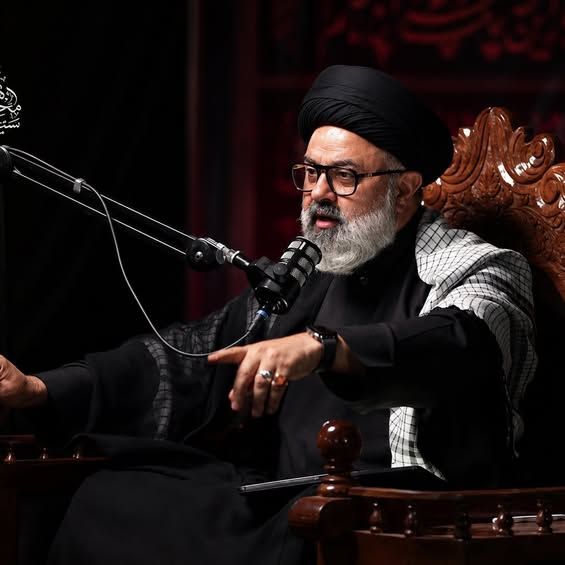
Sectarian unity and the living legacy of Aga Syed Mohammad Hadi
Shabir Ahmad
The standard narrative of the modern Muslim world is too often written in the ink of division. Turn on the news or scan geopolitical analyses, and you are invariably presented with a binary view of Islam as a perpetual, rigid schism between Shia and Sunni traditions. Yet, this fixation on friction deliberately ignores a deeper, more profound truth: the theological architecture holding these two major traditions together is infinitely stronger than the historical grievances used to pry them apart. The foundational pillars- a shared allegiance to the oneness of God (Tawhid), the timeless guidance of the Holy Qur’an, and a deep reverence for the Prophet Muhammad(peace be upon him) form an unbreakable spiritual baseline. True Islamic solidarity does not demand that either tradition erase its distinct identity or smooth over centuries of intellectual debate. Rather, it demands a collective recognition that in an increasingly complex global landscape, internal fragmentation is a luxury the Muslim community (Ummah) simply cannot afford.
Sectarianism is rarely an organic byproduct of faith; it is almost always a manufactured tool, weaponized by political actors to turn neighbor against neighbor for localized leverage. When communities fall into the trap of mutual suspicion, the real casualties are socioeconomic progress, educational advancement, and collective security. Overcoming this manufactured divide requires more than passive tolerance or polite, superficial dialogue. It demands active, courageous architecture at the grassroots and institutional levels. It requires leaders who are willing to step across historical fault lines and stand firmly in the spaces of shared vulnerability.
In the complex sociopolitical landscape of Jammu and Kashmira region that has navigated its fair share of external pressures and internal vulnerabilities, Aga Syed Mohammad Hadi has emerged as precisely this kind of essential architect. As a prominent scholar, community leader, and a guiding force within the historic socio-religious framework of AnjumanSharieShiyan, Aga Syed Hadi has made intra-faith peace the defining mandate of his public life. He carries the weight of a formidable intellectual ancestry, inheriting the mantle of scholarship from his father, Aga Syed Mohammad Fazlullah, and his grandfather, the revered Ayatollah Aga Syed Yusuf Al-Moosavi. Yet, rather than letting traditional authority become insulated, Aga Syed Hadi has modernized this legacy, transforming a localized pulpit into a vibrant platform for universal harmony.
What makes his approach distinctly effective is his refusal to let public discourse descend into reactionary tribalism. Whenever sectarian tensions threaten to flare, his voice emerges not to inflame, but to anchor. His public addresses are characterized by an uncompromising condemnation of sectarian provocations, serving as a vital stabilizing mechanism in moments of community crisis. By consistently re-centering public focus away from historical disputes and toward shared civic and spiritual responsibilities, he has built a rare currency of trust. This trust extends far beyond his immediate followers, earning him profound respect among Sunni scholars and local populations alike. In a world of polarized echo chambers, he has become that rarest of figures: a trusted arbiter capable of speaking across denominational boundaries with absolute credibility.
True unity, however, cannot survive on rhetoric alone; it must be fed by tangible social action. Aga Syed Hadi’s peacebuilding methodology recognizes that prejudice thrives in vacuums of ignorance and economic stagnation. Under his guidance, community upliftment, educational reform, and youth engagement are intentionally designed to cross sectarian lines. By opening educational and welfare initiatives to all members of the public, regardless of their specific school of thought, his leadership demonstrates that brotherhood is best forged through shared spaces and collaborative struggle.
This pragmatic, ground-level approach to peace has garnered significant international recognition. His invitations to address global forums on the importance of moderation, alongside being honored with the Global Leader Award for Community Upliftment, prove that his localized efforts serve as a universal blueprint. His work offers a powerful thesis for columnists and observers worldwide: the antidote to sectarianism is not theological compromise, but shared humanity and active, everyday justice.
Ultimately, the life and ongoing work of Aga Syed Mohammad Hadi remind us that unity is a deliberate choice. It is an ongoing, daily practice of empathy, education, and institutional courage. For the broader Muslim world, and indeed for any society fractured by internal lines, the lesson from Kashmir is clear: peace is not the absence of difference, but the presence of a shared purpose. Leaders like Aga Syed Hadi do not just preach harmony; they build the bridges that make it possible for the rest of us to walk across.
(The author is a research scholar and columnist from Raiyar Doodhpathri. He can be reached at sahilshabir@rocketmail.com)