

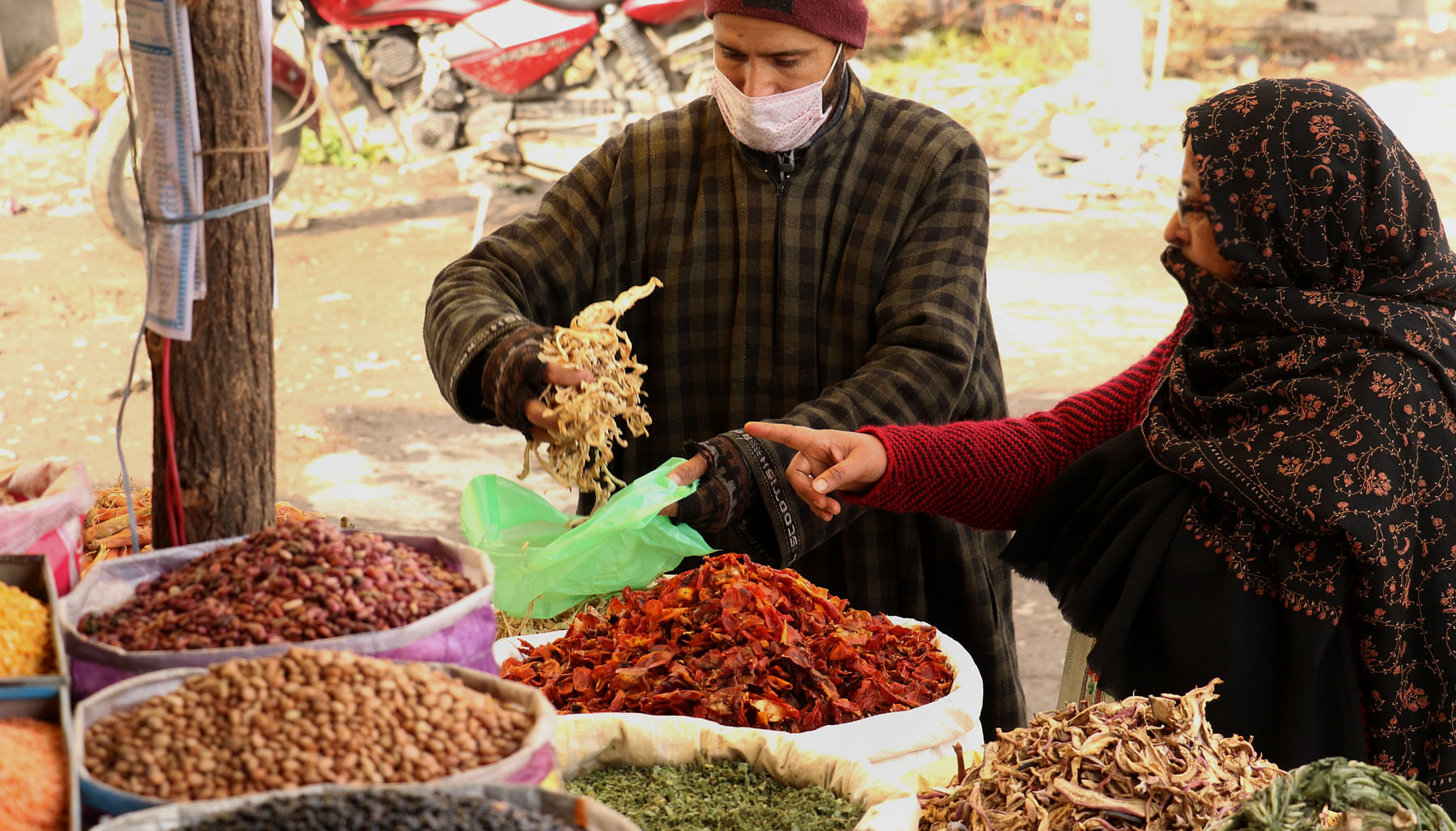
Srinagar, Nov 18: Forget tomatoes and onions, dried vegetable prices have gone through the roof in the ongoing winter.
A cursory look at the market trends reveals the rates of dry vegetables, which is a staple food in Kashmir during chilly weather, have hiked by more than 30 percent this winter.
For instance, dry bottle gourd (all’e haech’e) is selling at Rs 800 per kilogram. Normally this winter delicacy would cost Rs 240 per kilogram.
Similarly, rates of dry tomatoes (ruwangan haech’e) have gone up to Rs 800 kilogram too. This dried vegetable would sell at Rs 400 per kilogram.
Other dried vegetables including dried brinjals (wangan haech’e) and dried fish (hukhgadd) also sell at Rs 320 per kilogram and Rs 600 per kilogram, respectively.
Kashmir known for its quality agricultural produce, particularly dry vegetables including collard green, bottle gourd, tomatoes, brinjals, and others saw an alarming reduction in crop yield this year due to prolonged dry conditions.
Farmers reported that the unusual weather, marked by a lack of sufficient rainfall, led to stunted plant growth and a significant decrease in the volume of crops harvested. For those crops that did manage to grow, disease outbreaks, including fungal infections and blights, compounded the problem, leading to further losses.
The combination of poor yields and the cost of treatment for diseased crops has sent the price of dry vegetables soaring, causing concern among local households. Traders at Srinagar’s major markets have witnessed a sharp hike in the prices of essential dried vegetables from sellers.
“We get these dried vegetables from the growers at higher rates. They demand good rates from the buyers. This year, we have witnessed a drop in vegetable production in Kashmir,” said Abdul Salam Bhat, a seller.
In Kashmir drying surplus summer produce is a decades-old practice, ensuring food availability when fresh vegetables become scarce. A variety of vegetables are sundried and their demands soar in Kashmir despite the availability of fresh vegetables in the market throughout the winter.