Darakshan Hassan Bhat


The 100-day anti-drug campaign marked a turning point, bringing with it urgency, clarity, and resolve. At the center of this initiative stands Lieutenant Governor Manoj Sinha, whose firm and uncompromising stance has injected new momentum into the battle.
Under his administration, bold and unprecedented steps were taken, such as announcing strict action against drug peddlers, including the seizure of properties, cancellation of passports and driving licenses, and a zero-tolerance approach towards the entire drug network. His call resonated across every corner of Jammu and Kashmir.
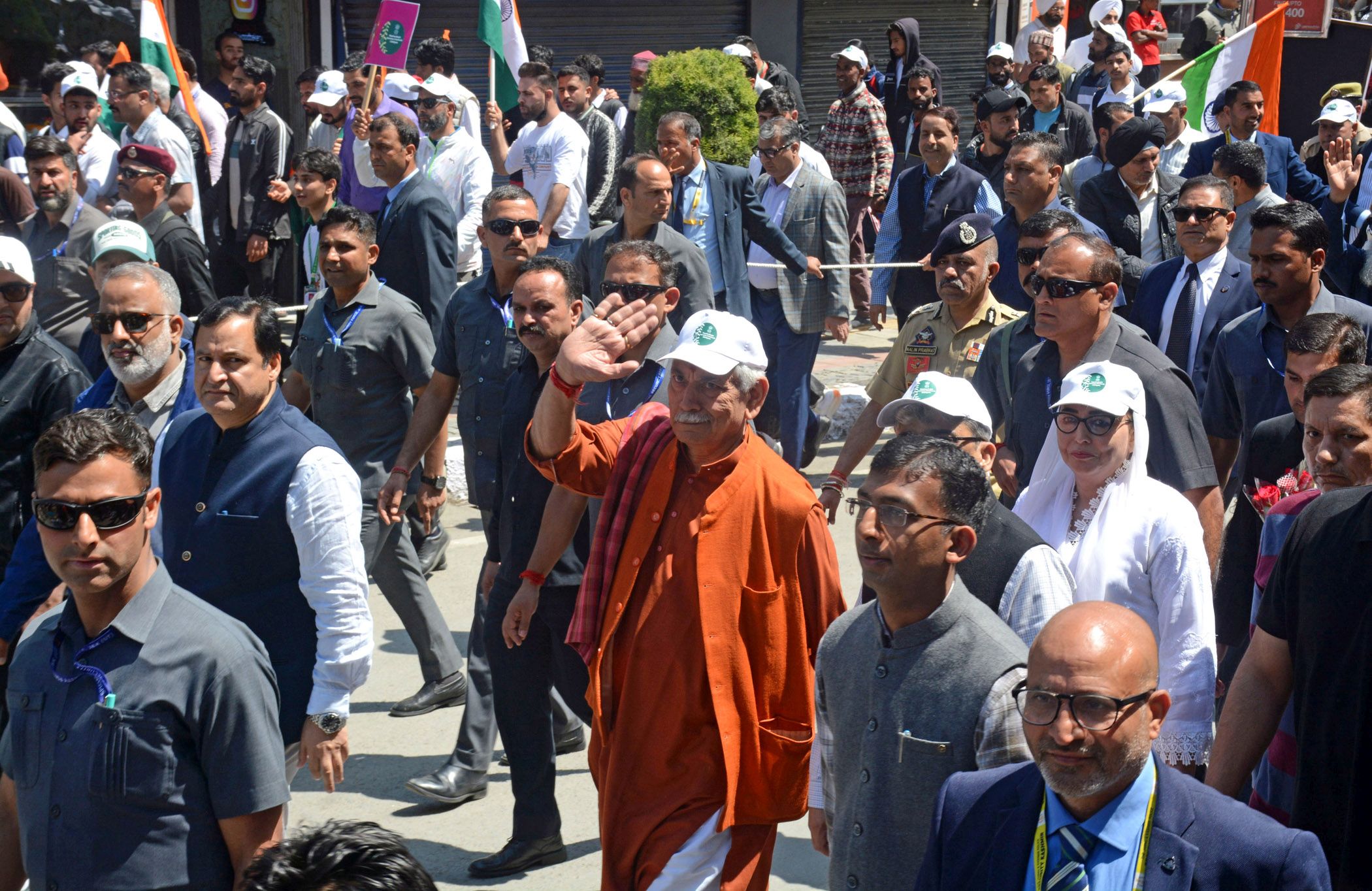
Our social fabric is degrading. Our families are breaking. Rise above divisions and unite against drugs. This became a call for a people's movement. Thousands gathered in Padyatras, especially the one held at TRC Srinagar, to Lal Chowk on May 2. People from every section, Sikhs, muslims, Christians joined the march. This gathering displayed the commitment of people when the government really wants people's welfare, people are ready to take front seats and face the situation.
For more than three decades, Kashmir has endured cycles of suffering that have deeply scarred its social fabric, even before we have witnessed different oppressions under maharaja rule. Generations grew up amid conflict and unrest, where violence claimed the lives of countless people, young and old. Just as the echoes of stones and bullets began to fade, a quieter yet far more destructive crisis took root here in Kashmir, and that is drug abuse.
Today, this menace is hollowing out Kashmir from within, engulfing almost every household. The youth, that is, literally the backbone, present and future of this place, are increasingly falling into drug addiction. Some have been lost forever, while others remain alive but disconnected, reduced to shadows of themselves. I have witnessed those who were exceptionally good in studies and toppers, who would have been great leaders and contributors in today's area in the graves because of drug abuse. It is a painful reality that almost every family has been touched by this crisis in some form.
There is no single explanation for how drugs spread so aggressively across the Valley, even before it was supplied and consumed, but a limited number of persons were involved. Society would strictly boycott the person who was found to be involved, but now it has become a story of every household. May be Years of psychological strain, social disruption, deliberate involvement, and the calculated operations of drug networks have all contributed. Drugs have filled a dangerous void, offering escape instead of opportunity, and dependency instead of direction.
Families suffered quietly, often too afraid to intervene. Addiction brought with it aggression and unpredictability. Many who tried to stop their loved ones faced abuse and even violence. There have been tragic instances where parents, especially mothers, were harmed or even killed by their own children under the influence of drugs. Fear extended beyond homes into communities, where confronting the issue seemed too risky.
Even law enforcement, at one point, struggled to generate the level of deterrence needed. Arrests were made, but the lack of sustained action allowed offenders to return quickly, reinforcing a sense of helplessness. The result was a society that felt trapped, watching its youth slip away.
Then came a decisive shift and a harsh ruling, one that has begun to redefine the fight against drugs in Kashmir.
This policy is showing a visible impact, like law enforcement agencies are acting with renewed vigor, conducting regular raids and targeting supply chains. Calls on Tele MANAS are increasing every day because communities themselves are taking responsibility and shedding their fear. Awareness campaigns are gaining traction in schools, colleges, and local institutions. A sense of collective responsibility is emerging, something that had long been missing.
At the core of this movement lies a force that can truly transform its outcome: the women of Kashmir. Mothers, sisters, wives, and daughters, our female folk have borne the deepest scars of this crisis. They have watched their children, husbands, and brothers getting killed slowly and embracing death. It's like these women are left with no choice but to do a role reversal. What was a primary responsibility of men, now women have to bear that. So this moment demands that women rise not just as victims, but as leaders.
History reminds us of the anti-arrack movement in the state of Andhra Pradesh, India, where women led a powerful grassroots revolution against alcohol abuse. Kashmir stands at a similar crossroads. Women must now step forward with the same determination. A mother is a child’s first teacher. She senses change before it becomes visible, understands emotions before they are spoken, and shapes values that last a lifetime. Empowering women, therefore, is not symbolic; it is essential.
Women can act as counsellors, protectors, and guides. They can monitor their children’s environments, build strong connections with schools, and intervene early. But empowerment must also mean strength, the ability to set boundaries, to distinguish between care and harmful indulgence. Love must sometimes be firm to be effective.
This campaign is also a tribute to the women who suffered in silence, to those who lost their lives, and to those who continue to fight for their families every day. It is a tribute to every mother striving to protect the future of Kashmir. The 100-day campaign represents more than administrative action; it reflects what is possible when leadership is determined, and society responds.
Kashmir today stands at a decisive moment. One path leads to further decline; the other offers recovery and renewal. Encouragingly, a new collective voice is rising across the Valley:`Ab aur nahi’. No more silence. No more fear. No more losing our youth. There is hope rising in Kashmir, and this time, it is backed by action, leadership, and a united society.
If sustained with the same resolve, this initiative can become more than a campaign. It can mark the beginning of a long-term transformation, one that restores not just individuals but the very soul of Kashmir, and in this journey, every Kashmiri has a role to play.
Women will be at the heart of whether this fight is won or lost. Real change will not come only from policies or enforcement, but from what happens inside homes, in conversations between mothers and children, in the quiet vigilance that often goes unnoticed. It is women who can spot the earliest signs, who can refuse to normalize destructive behavior, and who can hold families together when everything begins to fall apart. Their courage, whether in speaking up, seeking help, or simply refusing to stay silent, can shift the direction of entire households and, in turn, society itself. If Kashmir is to truly overcome this crisis, it will be because its women chose to stand firm, protect their families, and lead this change from the front.

(The author can be reached at darakshanhassanbhat@gmail.com)