

Suhail Gaznavi
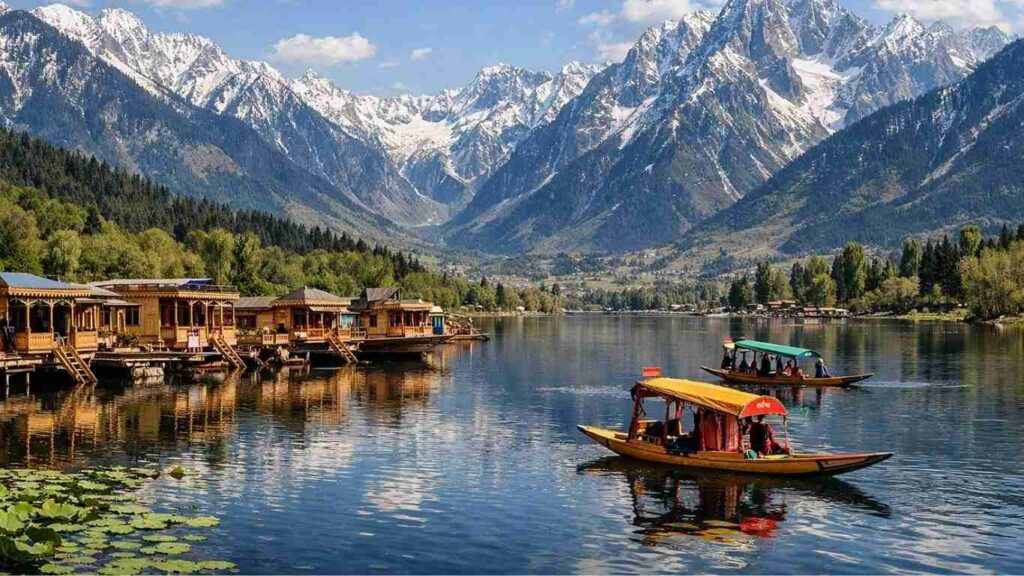
Every tourist season in Kashmir is celebrated as an economic success. Hotels report high occupancy, restaurants become crowded, taxis remain busy, markets see increased footfall, and social media fills with photographs of Dal Lake, Gulmarg, Pahalgam and Sonamarg.
This argument is not against tourists coming to Kashmir, nor is it against the expansion of the tourism sector. On the contrary, Kashmir needs more tourism, better tourism infrastructure and greater investment in the sector. Tourism has enormous potential to generate employment, support local businesses, promote Kashmiri culture and strengthen the wider economy. The question, therefore, is not whether more tourists should come to Kashmir, but whether we are developing the tourism sector in a way that ensures the maximum and lasting economic benefit for the people of Kashmir.
The numbers are impressive. The arrival of tourists is routinely presented as proof that Kashmir’s economy is thriving.
But there is a question that receives far less attention:
What remains after the tourist leaves?
Does tourism create permanent livelihoods, productive assets and economic security for ordinary Kashmiris—or does it merely create a few months of intense economic activity followed by another period of uncertainty?
Tourism undoubtedly remains one of Kashmir’s most important economic sectors. It supports hotels, restaurants, transport operators, guides, handicraft sellers, photographers, pony owners, small traders and countless other workers. Thousands of families depend directly or indirectly on visitors.
But the real measure of a successful tourism economy should not simply be the number of tourists entering Kashmir. It should be the amount of sustainable local wealth generated by every tourist.
A tourist may spend thousands of rupees during a trip, but where does that money ultimately go?
If a large portion goes towards accommodation, transportation, externally sourced goods, online platforms and businesses with limited local employment, the headline tourist figures may look impressive while the economic multiplier within Kashmir remains relatively weak.
This is the fundamental question Kashmir needs to ask.
Tourism Cannot Become Another Form of Seasonal Employment.
One of the weaknesses of Kashmir’s tourism economy is its seasonality. A good tourist season can generate substantial income, but many workers remain vulnerable when the season ends.
A hotel worker may have employment during peak months. A taxi driver may earn well during summer. A guide may have several profitable months. A restaurant may operate at full capacity during the tourist rush.
But what happens afterwards?
A genuinely transformative tourism economy should provide workers with skills, capital and opportunities that remain valuable throughout the year.
Otherwise, tourism risks becoming a cycle of seasonal prosperity followed by seasonal insecurity.
More Tourists Do Not Automatically Mean More Prosperity
There is also a danger in treating tourist numbers as the ultimate indicator of economic development.
A destination can receive millions of visitors and still have large numbers of low-paid workers, informal employment, and small businesses struggling to survive.
The objective should therefore not simply be to increase tourist arrivals indefinitely.
Kashmir needs to increase the economic value generated per visitor.
Instead of asking only, “How many tourists came this year?”, policymakers should also ask:
How much did the average tourist spend locally? How many local jobs were created? How many local businesses benefited? How much local produce was consumed? How much of the tourism revenue remained within Kashmir?
These questions would give us a much clearer picture of tourism’s actual contribution to the local economy.
Why Not Connect Tourism With Agriculture?
One of Kashmir’s greatest missed opportunities is the weak connection between tourism and local agriculture.
Hotels and restaurants require vegetables, fruits, dairy products, meat, rice, and other food items every day. Yet Kashmir continues to face challenges in ensuring that local agricultural producers capture a larger share of this demand.
Imagine a system where hotels purchase directly from organised groups of local farmers.
Imagine tourist resorts promoting Kashmiri apples, saffron, walnuts, honey, dairy products and traditional foods as part of the visitor experience.
Imagine every major tourist destination becoming a marketplace not only for accommodation and sightseeing but also for Kashmir’s agricultural economy.
That would transform tourism from a service sector into a multiplier for agriculture, food processing, handicrafts, and small manufacturing.
Tourism Must Create Entrepreneurs, Not Only Workers
Kashmir cannot build a resilient tourism economy by producing only more employees.
It must produce entrepreneurs.
Young people should be encouraged to develop businesses around adventure tourism, eco-tourism, local cuisine, cultural experiences, handicrafts, digital tourism, rural homestays, trekking, winter tourism and specialised travel services.
Government policy should therefore move beyond subsidies and tourist infrastructure and focus on creating an ecosystem in which small local enterprises can survive and grow.
A young Kashmiri should not have to choose only between a government job and a seasonal tourism job.
Tourism should also offer the possibility of becoming a business owner.
But Tourism Has a Cost
There is another side of the tourism story that is rarely discussed.
More tourists also mean more traffic, more waste, greater pressure on water supplies, increased construction, and greater stress on fragile ecosystems.
If tourism grows without adequate carrying-capacity planning, Kashmir could eventually damage the very environment that attracts tourists.
The paradox is obvious: Kashmir cannot afford to destroy its natural beauty in the process of selling it.
The objective should therefore be sustainable tourism rather than uncontrolled mass tourism.
Tourist numbers cannot be the only target. Environmental capacity must be equally important.
The Tourist Should Become a Consumer of Kashmir’s Economy
The ultimate objective should be to ensure that visitors consume more than scenery.
They should consume local food.
They should purchase local handicrafts.
They should stay in locally owned establishments.
They should experience Kashmiri culture.
They should visit rural areas.
They should buy agricultural products.
They should employ local guides and service providers.
In other words, the tourist should become a participant in Kashmir’s local economy rather than merely a visitor passing through it.
Beyond the Tourist Season
Kashmir needs a tourism policy that asks what happens after the tourist leaves.
Does the worker have another source of income?
Does the farmer have a market?
Does the artisan have a customer?
Does the young entrepreneur have a sustainable business?
Does the local community have better infrastructure?
Does the environment remain protected?
If the answer to these questions is yes, then tourism is doing more than generating revenue. It is generating development.
But if the tourist leaves and Kashmir is left with seasonal workers, congested roads, rising property prices, mountains of waste and little long-term economic transformation, then simply celebrating tourist arrival figures is not enough.
Kashmir does not need tourism merely for the sake of tourism.
It needs tourism that creates lasting wealth, dignified employment, local enterprise and sustainable development.
The real success of a tourist season should therefore not be measured when the tourist arrives.
It should be measured after the tourist leaves.
(The author is a practicing advocate at the High Court of Jammu, Kashmir and Ladakh in Srinagar. He can be reached at suhailadv13@gmail.com)