

Ali Zaroon
Pakistan is always in the news, not for good things but for the negative aspects and events no one wants to see. Pakistan has been grappling with multiple major crises, including military takeovers, army influence, political instability, a poor economy, unemployment, terrorism, and religious extremism. All these factors have collectively pushed Pakistan to a point from which the future looks bleak, and recovery seems impossible. It seems Pakistan has become accustomed to instability, chaos and turmoil.
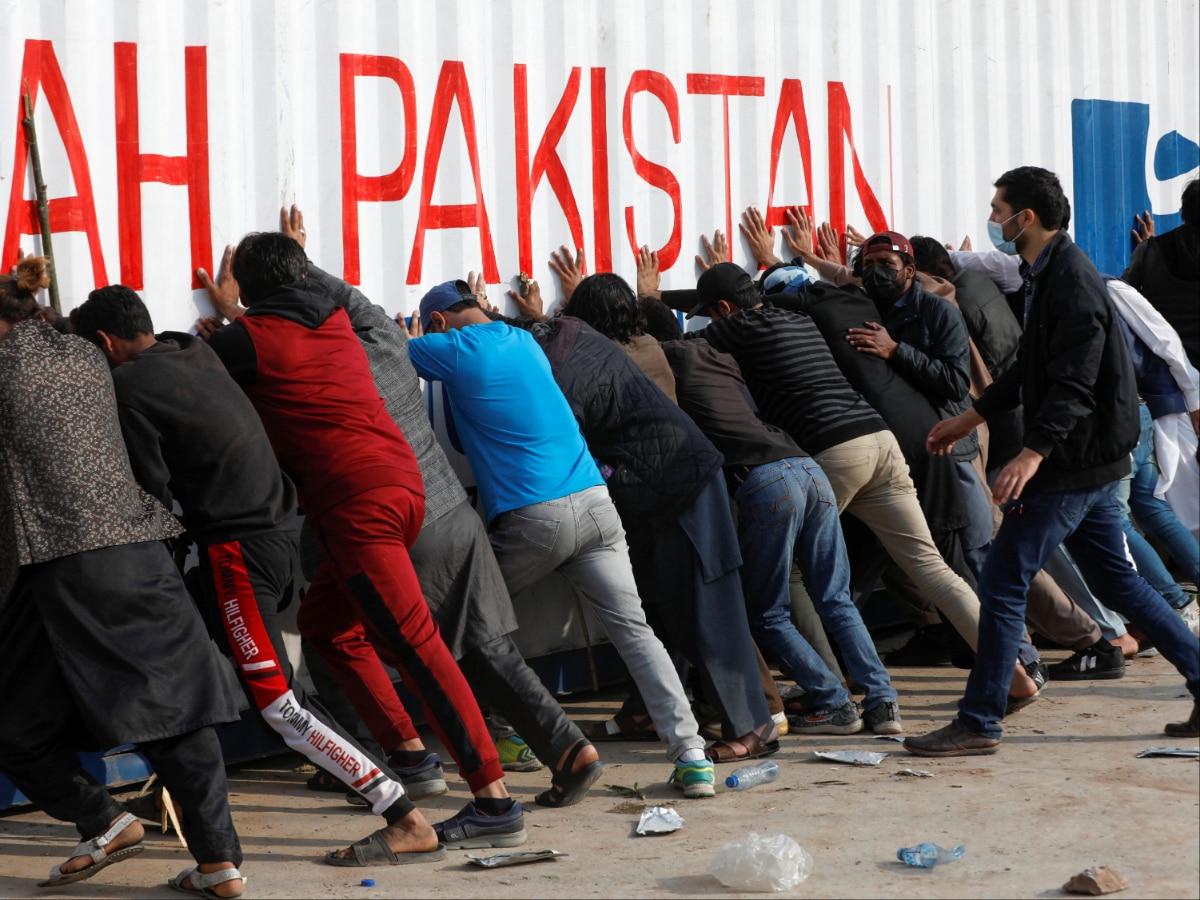
The current scenario, apart from PoJK, Balochistan and Pakistan’s indiscriminate bombing of Afghanistan, which has attracted global attention, is marked by a recent wave of protests by supporters of Pakistan’s jailed former Prime Minister Imran Khan and his party, the PTI, from Khyber Pakhtunkhwa towards Islamabad. They are demanding his release and proper treatment in jail, where he has reportedly been subjected to abuse and improper treatment. Reports suggest that his health is deteriorating and that he is losing his eyesight. He is also reportedly not being allowed to meet even his family. The demonstrators raised anti-establishment slogans, mainly targeting Field Marshal and Chief of Army Staff Asim Munir rather than the elected government. As the protests went out of control, Pakistan’s President announced an emergency in the northwestern province of Khyber Pakhtunkhwa, citing terrorism and law and order, a stronghold of the PTI and Imran Khan, dissolving the provincial assembly, arresting leaders, and placing the province under presidential control.
It is worth mentioning that protests for Imran Khan have taken place on a much larger scale in the past, yet no such move was considered. Imran Khan has been at odds with the army for a long time, but since Asim Munir took office, the civil-military balance has changed drastically in favour of the army.
The confrontation between Imran Khan and the army has taken a new shape under Asim Munir, with pressure mounting on Imran Khan from all fronts. It is evident that Asim Munir wields considerable power in Pakistan. Therefore, imposing an emergency in a province that is a stronghold of his rival and main opponent appears more like a decision driven by Asim Munir than by the president. It seems aimed at taking control into his own hands, crushing the anti-establishment movement, leaving no room for such demonstrations, and controlling what happens in Khyber Pakhtunkhwa.
One crucial point worth mentioning is that Pakistan’s president cited terrorism and the deteriorating law and order situation in Khyber Pakhtunkhwa as reasons for imposing the emergency. For years, India has repeatedly called out Pakistan on international platforms over its alleged support for terrorism. Imposing an emergency on such grounds could inadvertently reinforce the argument that Pakistan itself is grappling with terrorism and instability. If this is the case, and the country is facing terrorism and law and order problems across PoJK, Balochistan and other regions, then the emergency should be imposed nationally rather than limited to one province. However, Pakistan has long faced allegations of suppressing dissent, detaining activists and restricting freedom of expression, creating an environment in which criticism of the establishment can come at a high cost. What makes the current situation more significant is the apparent concentration of power in the hands of Asim Munir, an appointed military chief rather than an elected leader. This emergency, therefore, could be seen as an inadvertent admission of a problem Pakistan has long been accused of avoiding: that the country is struggling with deep-rooted instability, terrorism and a deteriorating law and order situation.
We can measure the level of chaos and instability in Pakistan by looking at the situation across its regions. No province, not even its most populous province, Punjab, appears entirely free from political and economic challenges. In PoJK, the Pakistan-occupied territory, reports of prolonged internet shutdowns, restrictions, human rights violations and the detention of activists have emerged amid continuing unrest. In PoGB, concerns over political representation, electoral rights, inflation and the exploitation of local resources continue to fuel public discontent. Balochistan faces a persistent insurgency, enforced disappearances, alleged human rights abuses and extrajudicial killings. Khyber Pakhtunkhwa is grappling with militant violence, security concerns and political turmoil surrounding Imran Khan and his supporters. All this is unfolding amid political uncertainty, mounting debt, poverty, shrinking foreign exchange reserves and unemployment. Pakistan appears to have little economic or political breathing room as its challenges continue to multiply.
Repeated terrorist attacks and security concerns have also undermined confidence in the country’s stability, leaving ordinary Pakistanis to bear the consequences of violence, economic hardship and political repression. Yet, despite these domestic challenges, Pakistan continues to present itself on the international stage as a peacemaker, dealmaker and mediator in global conflicts. This raises a fundamental question: how can a country struggling to manage its own internal crises credibly project itself as a force for peace and stability abroad? Before attempting to mediate conflicts elsewhere, should Pakistan not first address the instability within its own borders, protect the rights of its citizens and establish lasting political and economic stability?
Many therefore argue that the recent decision to impose an emergency reflects Asim Munir’s intentions to take control into his own hands rather than leave the province under its elected government, whose authority has now been undermined by the dissolution of the provincial assembly.
(The author can be reached at alizaroon112@gmail.com)