

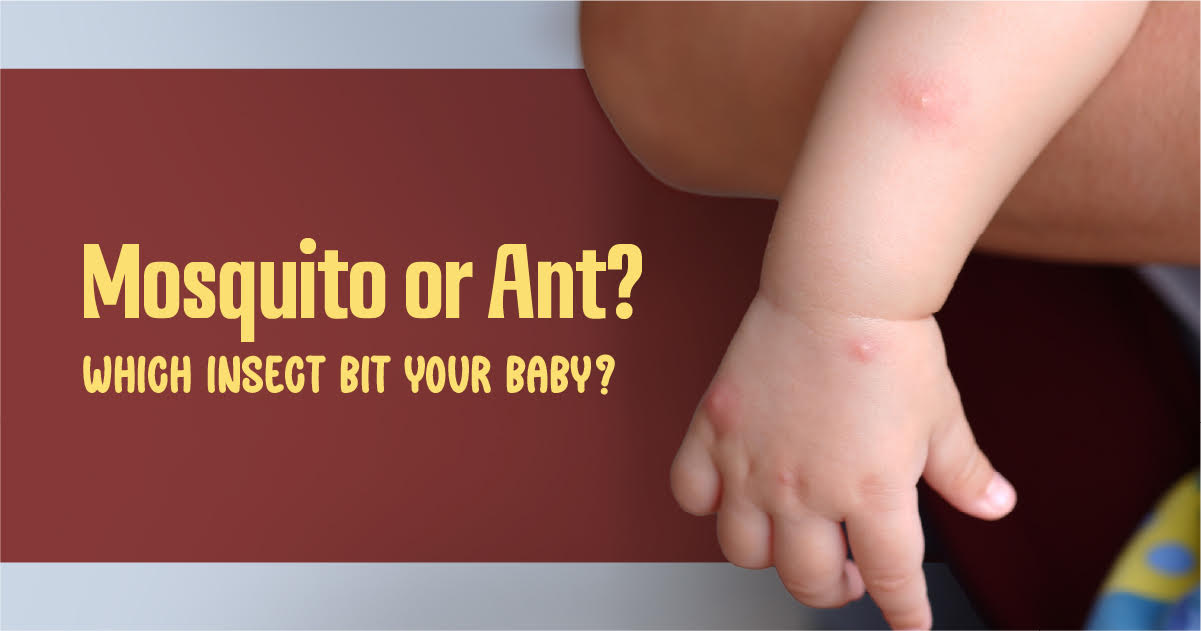
You notice a red bump on your baby’s leg after an evening outdoors. By the next morning, it looks larger, raised and slightly swollen. Was it a mosquito, an ant, or another insect?
A mosquito bite on baby skin can look similar to several other insect bites, so appearance alone may not give a definite answer. The number of marks, where they appear, when they appeared, and whether they itch, burn or hurt can offer useful clues.
What Does a Mosquito Bite on a Baby Look Like?
A mosquito bite often appears as a small, raised red or pink bump. Babies may rub the area because of itching.
The bites are more likely to appear on exposed areas such as the arms, legs, face or feet, especially after time outdoors in the evening or when mosquitoes have entered the room.
Some bites remain small, while others become noticeably swollen over the next several hours.
Why Do Mosquito Bites Swell So Much on Babies?
Mosquitoes leave small amounts of saliva in the skin when they bite. The body reacts to it, causing redness, itching and swelling.
Young children can sometimes develop stronger local reactions than adults. This means a bite may look larger, firmer or redder without automatically indicating a serious allergy.
A baby mosquito bite turning red and hard can still be part of a local inflammatory reaction. What matters is whether it gradually settles or keeps becoming more painful, warmer, more swollen or increasingly red.
How Can Ant Bites Look Different?
Ant bites or stings may feel more immediately painful or burning than mosquito bites.
Parents may notice a small red bump or several marks around the feet, ankles, legs or hands, particularly after the child has been on grass, near a balcony, garden or outdoor play area.
Different ant species can cause different skin reactions, so the appearance may vary.
For a mild red ant bite on a baby, treatment is usually focused on comfort. Gently clean the area, use a cool compress when appropriate, and try to prevent scratching or rubbing.
Mosquito vs Ant vs Other Insect: A Quick Comparison
| Possible cause | What parents may notice | Common clue |
| Mosquito | Raised itchy bump, possible swelling | Exposed skin, often after evening exposure |
| Ant | Red bump, burning or tenderness | Feet, legs or hands after outdoor contact |
| Other small insects | Several itchy red bumps | May appear in clusters depending on exposure |
These patterns can suggest a likely cause, but they cannot confirm the exact insect.
What Can You Apply on a Baby’s Mosquito Bite?
For a mild bite, the first steps are simple.
Gently clean the area, use a cool compress to reduce discomfort, keep the baby’s nails trimmed and try to stop repeated scratching.
When considering what to apply on a baby mosquito bite, avoid using strong essential oils, adult balms, medicated creams or unfamiliar home remedies without checking whether they are suitable for the child’s age.
A formulated after-bite baby-care product can also be used as part of a comfort routine when appropriate. Mother Sparsh After Bite Turmeric Balm, for example, is intended for topical post-bite skin comfort. It should not be used as a substitute for medical care if symptoms suggest infection or an allergic reaction.
Is Turmeric Safe on Baby Skin?
Turmeric is a familiar ingredient in Indian households, and grandparents may suggest it for minor skin concerns.
However, traditional familiarity does not mean that homemade turmeric pastes are automatically suitable for irritated baby skin.
Raw or homemade preparations can vary in concentration and may contain ingredients that cause irritation or contamination.
So, is turmeric safe on baby skin? It depends on the formulation and the child’s skin. A baby-care product containing turmeric is different from applying kitchen turmeric directly to a bite.
When Does an Insect Bite Need Medical Attention?
Redness or swelling alone does not necessarily mean infection.
Parents should contact a paediatrician if the area keeps spreading, becomes increasingly painful or warm, develops pus or discharge, or if the baby develops fever or appears unwell.
The same applies if swelling keeps increasing, the bite is close to the eye, or the mark does not seem to improve.
A mosquito bite allergy in babies is also different from ordinary local swelling. Seek urgent medical attention if the baby develops difficulty breathing, swelling of the lips, tongue, face or throat, widespread hives with other symptoms, repeated vomiting, unusual weakness or reduced responsiveness.