

Er. Seerat Shafi
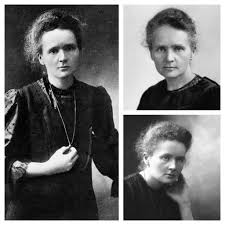
The life of Marie Curie is widely recognised for its contribution to science. Alongside her scientific work, her role in supporting education and enabling others to pursue learning forms an important and well-documented part of her legacy. Her work reflects a sustained commitment to knowledge, not only through discovery but also through teaching, collaboration, and practical support for others.
Born Maria Skłodowska in Warsaw on 7 November 1867, Curie grew up in a family where education held a central place. Her father, a teacher of mathematics and physics, introduced her to scientific thinking at an early age. Financial limitations, however, made higher education difficult for all the children. In response to these constraints, Curie and her elder sister Bronisława Dłuska entered into a structured arrangement. Marie worked for several years as a governess and used her earnings to support her sister’s medical studies in Paris. This arrangement required patience and discipline, as it delayed her own formal education, but it ensured that her sister could complete her training.
During this period, Curie continued her own studies independently. She read widely and maintained her engagement with scientific subjects while working. This phase of self-directed learning reflects a consistent aspect of her approach to knowledge. When Bronisława later established herself in Paris, she supported Marie’s move to the city. This mutual effort allowed both sisters to pursue higher education and stands as a documented example of shared responsibility within a family.
Curie moved to Paris in 1891 and enrolled at the University of Paris. There, she studied physics and mathematics with distinction. She completed her degree in physics in 1893, graduating first in her class, and obtained a second degree in mathematics in 1894. During this time, she met Pierre Curie, whose collaboration became central to her scientific work. Their partnership was based on shared research interests and contributed directly to their later discoveries.
Curie’s scientific work developed from earlier observations made by Henri Becquerel, who had identified spontaneous radiation from uranium salts. Curie extended this research through systematic experimentation and demonstrated that the phenomenon was an intrinsic property of certain elements. She introduced the term radioactivity to describe this process. Working with Pierre Curie, she identified two new elements, polonium and radium, in 1898. These discoveries contributed to a broader shift in scientific understanding and played an important role in the development of modern physics and chemistry.
In 1903, Curie shared the Nobel Prize in Physics 1903 with Pierre Curie and Becquerel in recognition of their research on radiation. This marked the first time a woman received a Nobel Prize. Following the death of Pierre Curie in 1906, she continued her research and assumed his teaching position at the Sorbonne, becoming the first woman to teach there. In this role, she contributed to higher education through formal lectures and research guidance.
Curie’s work as a teacher formed an important part of her contribution to education. Her lectures were known for clarity and precision, and her laboratory provided a setting in which students could engage with advanced scientific research. Among those closely associated with her work was her daughter Irène Joliot-Curie, who later received the Nobel Prize in Chemistry in 1935 for her own research. This continuity reflects the transmission of knowledge within both academic and family settings.
In 1911, Curie was awarded the Nobel Prize in Chemistry 1911 for her work in isolating radium and advancing the study of radioactive elements. She remains the only individual to have received Nobel Prizes in two different scientific disciplines. These recognitions reflect the significance of her scientific contributions, though they represent only one dimension of her work.
A defining feature of Curie’s approach to science was her decision not to patent her methods for isolating radium. This allowed other researchers to access and build upon her findings without restriction. Her decision contributed to the wider development of scientific research and reflects an understanding of knowledge as something to be shared within the scientific community.
During the First World War, Curie applied her scientific expertise to practical use. She developed mobile radiography units, later known as Little Curies, which enabled the use of X-ray imaging in field hospitals. She also trained individuals, including women, to operate this equipment. These efforts expanded access to technical skills and supported medical work during the war. Her training programmes represent a documented example of how scientific knowledge can be shared in ways that enable others to contribute in practical contexts.
Curie’s long-term work with radioactive materials took place at a time when the risks associated with radiation were not fully understood. She handled these materials extensively over many years. She died on 4 July 1934 from aplastic anaemia, a condition associated with prolonged radiation exposure. Her laboratory notebooks remain preserved under controlled conditions due to their continued radioactivity.
Within her family, Curie’s emphasis on education continued across generations. Her daughter Irène pursued a career in science, while her other daughter, Ève Curie, became a writer and later documented aspects of her mother’s life and work. This continuation reflects the role of education as an ongoing process, sustained through both scientific research and written record.
Curie’s life demonstrates that the advancement of knowledge often involves sustained effort, cooperation, and the support of others. Her role in enabling her sister’s education, her work as a teacher at the Sorbonne, and her training of radiological assistants during the First World War represent clear and documented contributions to the education of others. These aspects complement her scientific achievements and form an essential part of her legacy.
The influence of Curie’s work continues in fields such as nuclear physics, medical imaging, and cancer treatment. Her contributions remain part of the foundation of many modern scientific developments. At the same time, her approach to knowledge, characterised by precision, discipline, and openness, continues to inform how scientific work is conducted and shared.
Marie Curie’s work advanced scientific understanding. Her commitment to education ensured that this advancement was not limited to individual achievement but became part of a wider and continuing process of learning and application.
(Er. Seerat Shafi holds an M.Tech in electrical power and energy systems from the National Institute of Technology Srinagar.)