

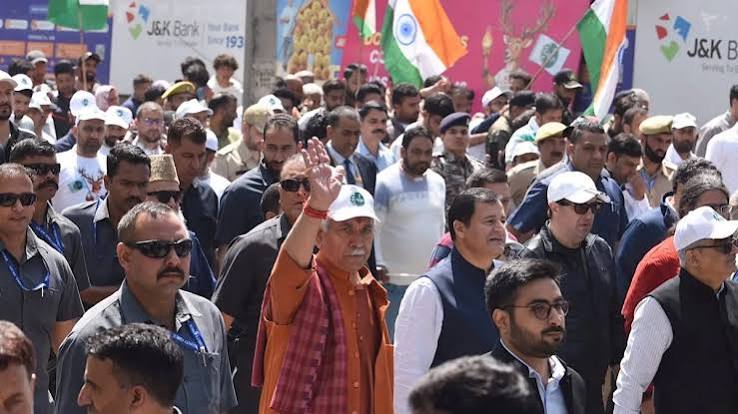
The anti-drug campaign launched by the administration, which ran for over 100 days across the Union Territory, appears to have been a remarkable success, judging by the overwhelming response it received from the public. Members of civil society, religious leaders, educational institutions and ordinary citizens came together in a rare display of unity against a menace that threatens the very future of Kashmir. It was one of those uncommon moments when the government and the people walked together for a common cause.
The campaign also drew unprecedented support from religious institutions. From the pulpits of mosques, temples and gurdwaras, religious leaders joined hands with the administration in spreading awareness about the dangers of drug abuse, particularly among the youth. Such unanimity across faiths in support of a government initiative is rare in Kashmir and deserves recognition.
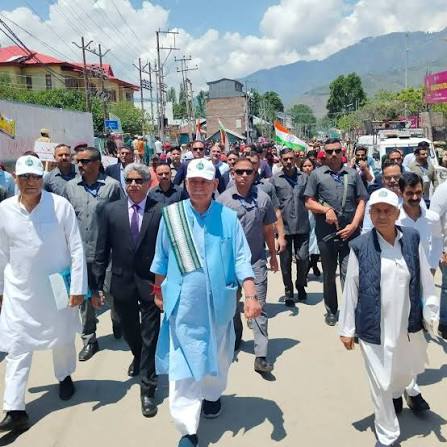
The movement was led personally by Lieutenant Governor Manoj Sinha, who travelled extensively across almost every district of Jammu and Kashmir to create awareness about the growing menace of narcotics. At every stop, he was greeted by large gatherings of people, cutting across political affiliations and religious beliefs, who pledged their support for the campaign. It was perhaps the first time in recent history that a government-led initiative of this nature generated such widespread public participation.
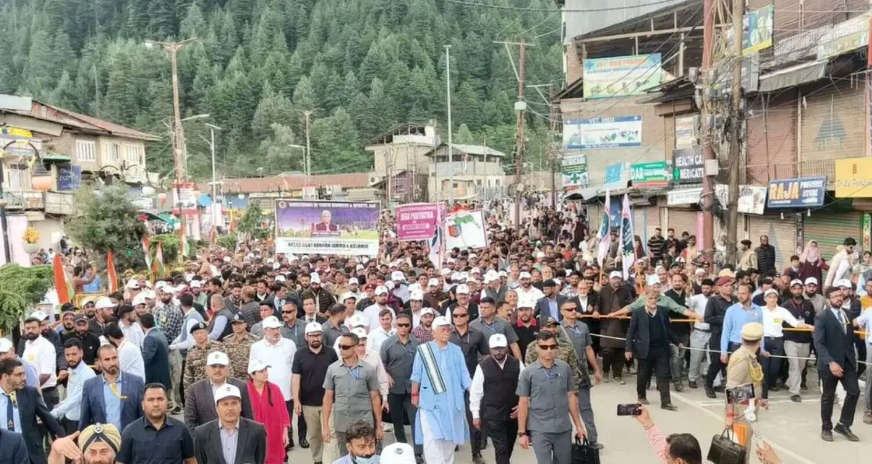
People close to the Lieutenant Governor describe the campaign as a personal crusade. They say he directed both the police and the civil administration to show no mercy towards drug traffickers and the narcotics cartel. Reports suggest he was deeply disturbed by stories of teenagers selling their mothers’ jewellery to finance their addiction.
According to official estimates, nearly 3,000 awareness programmes were organised across Jammu and Kashmir during the 100-day campaign. Schools and colleges, community groups, law enforcement agencies and government departments all played their part. The campaign included padyatras, seminars, village-level outreach programmes, youth engagement initiatives, rallies, sports events and cultural programmes designed to educate people about the devastating consequences of drug abuse.
Drug abuse, however, is not a recent phenomenon in Kashmir. It has existed for decades. Large tracts of land, particularly in South Kashmir, were once used for the cultivation of charas and other cannabis crops. Every year, Excise Department teams would destroy the standing crop, but the exercise rarely went beyond photographs published in newspapers. Hardly any serious effort was made to dismantle the networks behind the illicit trade.
Likewise, it was common knowledge that organised syndicates were supplying narcotics to the youth across different parts of Kashmir. Yet successive governments failed to act decisively. The illegal trade flourished, and the number of addicts rose alarmingly. It goes to the credit of Lieutenant Governor Manoj Sinha that he recognised the gravity of the crisis—not merely as a law-and-order problem but as a social catastrophe capable of destroying families, destabilising communities and jeopardising the future of an entire generation. Under his leadership, the administration launched a comprehensive campaign that found acceptance across every section of society.
Drug addiction often begins with experimentation in social settings. For others, especially those exposed to prescription opioids, dependence develops through legitimate medication before spiralling into addiction. Whatever the path, addiction gradually takes control. Tolerance increases, larger doses become necessary, and eventually the drug is required not to experience pleasure but simply to feel normal. Attempts to quit bring intense cravings and painful withdrawal. That is why drug abuse is not merely a personal tragedy; it is one of the gravest challenges confronting our society today.
But awareness campaigns and punitive action alone cannot solve the problem. Demolishing the properties of drug smugglers or organising rallies, important though they are, cannot substitute for a comprehensive long-term strategy. The de-addiction infrastructure must be expanded and strengthened. Rehabilitation facilities must become more accessible and effective. Schools, colleges, panchayats, urban local bodies and community organisations must remain active partners in prevention, treatment and reintegration.
No campaign, however well-intentioned, can succeed without public ownership. Every citizen has a role to play. Parents must remain vigilant, teachers must identify vulnerable students, communities must support recovering addicts, and people must report suspicious drug-related activity without fear or hesitation. The fight against drugs cannot be left to the government alone.
The success of the 100-day campaign should therefore be viewed not as the culmination of an effort but as the beginning of a much longer journey. The administration must now build on the momentum by ensuring sustained enforcement against traffickers while simultaneously investing in rehabilitation, counselling and community-based prevention.
At some point, Manoj Sinha will leave Jammu and Kashmir, as every administrator eventually does. But if this movement continues to inspire collective action long after his tenure ends, it may well become his most enduring legacy. He and his administration have delivered the first blow against the drug menace. It is now for the people of Jammu and Kashmir to ensure that the fight continues until the scourge is defeated for good.
The first steps have been taken. Now, together, we must keep walking.