

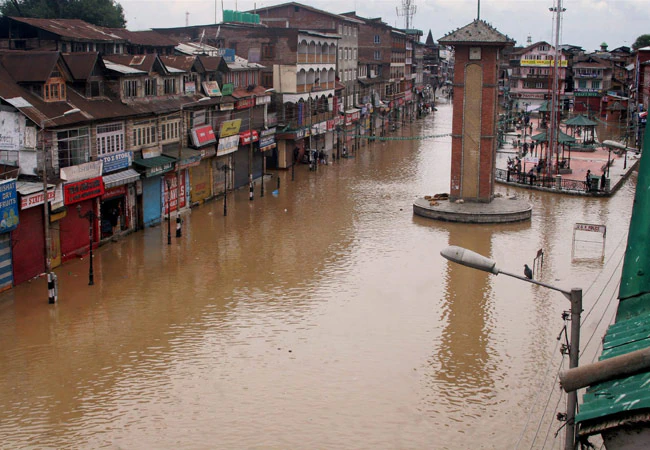
Srinagar: On the 12th anniversary of the devastating September 2014 floods, the Kashmir Trade Alliance (KTA) has urged the Jammu and Kashmir Government to ensure that a comprehensive, time-bound flood mitigation and preparedness plan is firmly in place to protect lives, livelihoods, businesses and critical infrastructure in the Kashmir Valley.
KTA President Aijaz Shahdhar said the anniversary of the 2014 disaster should not be observed merely as a day of remembrance but as an occasion to assess the administration’s preparedness and ensure that the lessons of the catastrophe are translated into concrete preventive action. “The floods of 2014 demonstrated the enormous economic and human cost that Kashmir can face when extreme rainfall overwhelms the river and drainage systems. Twelve years later, our priority must be to ensure that such devastation is never repeated. The government must adopt a zero-risk approach to flood preparedness and mitigation,” Shahdhar said.
KTA said the Government must therefore move beyond emergency response and focus on permanent mitigation. The Alliance urged the administration to undertake a comprehensive review of the flood-management infrastructure along the Jhelum and its tributaries, strengthen vulnerable embankments, ensure regular desilting and maintenance of critical drainage channels and pumping stations, and protect wetlands and natural water-retention areas from encroachment. It also called for strengthening real-time rainfall, river-level and flood forecasting systems, with warnings reaching residents and businesses sufficiently in advance. The Government should establish clear evacuation protocols for vulnerable areas and conduct regular multi-agency flood preparedness drills involving the administration, police, SDRF, NDRF, municipalities, traders and local communities.
KTA also welcomed recent steps towards strengthening early-warning systems and disaster-risk planning in Jammu and Kashmir, including proposed early flood-warning systems at key hydropower projects and work on a GIS-based multi-hazard risk atlas. However, Shahdhar stressed that these measures must form part of a unified Valley-wide flood mitigation strategy rather than remain isolated interventions.