

Darakshan Hassan Bhat
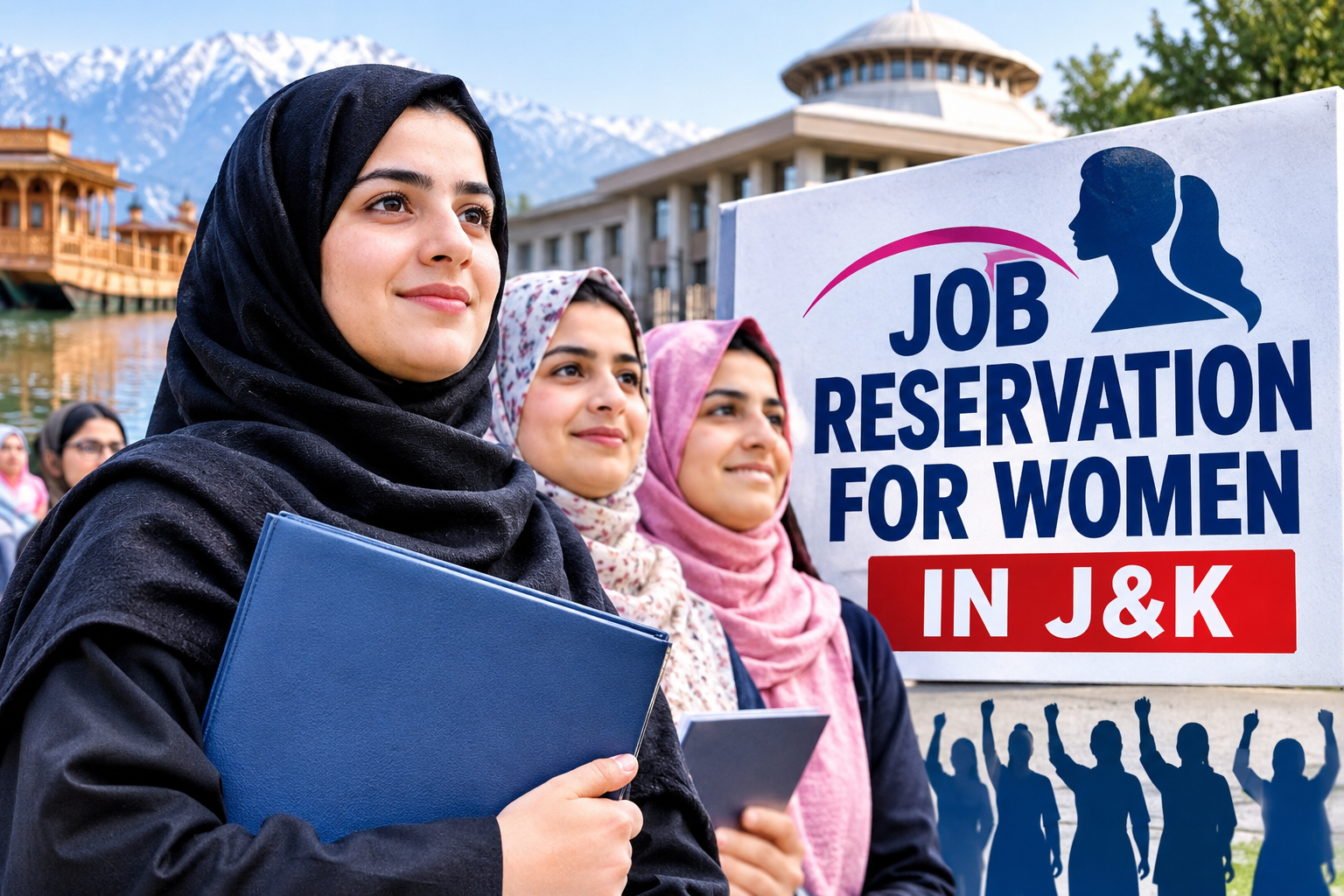
Women in India are provided with reservation and special representation opportunities in various sectors to promote participation and gender equality. At least 33% of seats are reserved for women in Panchayati Raj
Institutions and urban local bodies, while some states have increased this provision to 50%.
The 106th Constitutional Amendment Act, 2023, also provides for one-third reservation for women in the Lok Sabha and State Legislative Assemblies, subject to its implementation process. In
employment, certain states and Union Territories have introduced reservations for women in police services and other government departments. However, there is no uniform reservation quota for women
across all government jobs, and the provisions vary according to the applicable recruitment rules.
What we witnessed during the turmoil in Kashmir was limited women’s participation. Over the last thirty years, their potential has been marginalised and neglected due to the violence in the region. Sectors such as healthcare,
education, police, administration, technical services and other professional fields still lack adequate women’s involvement.
Kashmiri women, in particular, need targeted opportunities for participation and representation in certain sectors. Having gone through difficult circumstances and challenges, they now need encouragement and
institutional support. Introducing reservation in these sectors could encourage greater participation. The objective should not be limited to providing jobs; ensuring women’s meaningful participation is equally
important. Women’s representation as lawmakers, women in uniform, and women in healthcare can help bridge the gender gap in employment and representation. These are sectors where women’s involvement is essential,
yet their participation has often been limited by male dominance.
Women constitute an important social, economic, and democratic development. Their participation in public institutions, professional sectors and decision-making processes is essential for building an inclusive and
progressive society. Although women in J&K have made significant progress in education, healthcare, administration, entrepreneurship, sports and other fields, opportunities for equal representation and employment still need to
be strengthened. Reservation and targeted recruitment opportunities in specific sectors can help address these gaps and encourage more women to participate in public life.
The health sector offers considerable opportunities for women’s employment and professional participation. Women are needed as doctors, nurses, medical officers, specialists, pharmacists, laboratory technicians,
counsellors and community health workers. In remote and rural areas of Jammu and Kashmir, female healthcare professionals can play a particularly important role in improving access to maternal healthcare, reproductive
health services, child healthcare and general medical assistance.
Many women and girls feel more comfortable discussing personal health concerns with female medical professionals. Therefore, ensuring adequate representation of women in hospitals, primary health centres, community
health centres and other medical institutions can improve healthcare delivery. Special recruitment opportunities and appropriate reservation provisions can encourage qualified women to enter and serve in this sector.
Education is one of the most important sectors for women’s empowerment.
Women teachers, lecturers, professors, researchers, counsellors and educational administrators contribute not only to academic development but also to the confidence and aspirations of young girls. In many rural and far-
flung areas of Jammu and Kashmir, the availability of female teachers can encourage parents to send their daughters to schools and colleges. Female educators can also serve as role models for girls who aspire to pursue higher
education and professional careers. The government should ensure adequate opportunities for women in teaching, higher education, research institutions and educational administration. Recruitment policies should promote women’s
representation while maintaining merit, qualifications and professional standards. Special attention should also be given to leadership positions so that women can participate in educational policy-making and institutional
management.Women’s representation in legislative institutions and political decision-making is equally important. Women constitute nearly half of society, yet their participation in political leadership and decision-making has historically
remained limited. Greater representation of women in the Legislative Assembly, local bodies, Panchayati Raj Institutions and urban local bodies can ensure that issues concerning women, children, education, healthcare,
employment, safety and social welfare receive appropriate attention. The Constitution (106th Amendment) Act, 2023, provides for one-third. reservation for women in the Lok Sabha, State Legislative Assemblies and the
Legislative Assembly of the National Capital Territory of Delhi, subject to the constitutional implementation process. At the grassroots level, reservation for women in Panchayats and municipalities has already created
opportunities for women to participate in local governance. Jammu and Kashmir should continue to encourage women’s leadership through political awareness, capacity-building programmes, leadership training and effective
implementation of applicable reservation provisions.
(The author can be reached at darakshanhassanbhat@gmail.com)