Sabahat Mehraj

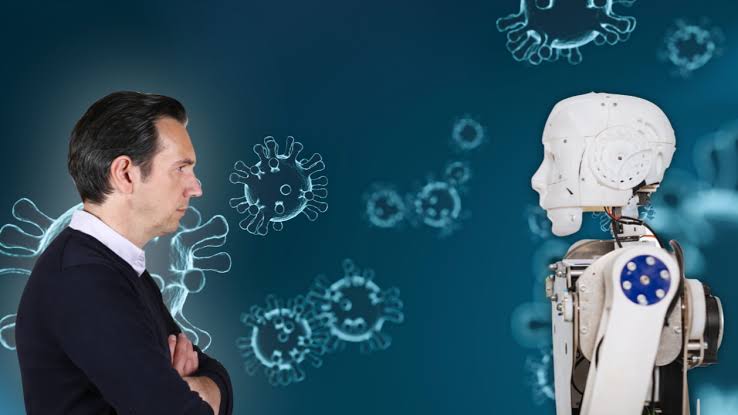
In an era of hyper-connectivity, a quiet shift is taking place in the emotional landscape of everyday life. As artificial intelligence becomes more responsive, endlessly patient, and tailored to individual preferences, millions of users are turning to algorithmically generated companions to process emotional distress, vent about their daily frustrations, or simply find a sense of presence. What begins as a convenient emotional outlet, however, may be turning into something more complicated: the gradual substitution of messy, reciprocal human relationships with frictionless artificial connection.
Human relationships are, by their very nature, complicated. They demand compromise, active listening, emotional tolerance, and the ability to navigate interpersonal friction. When we engage with family, friends, or colleagues, we risk rejection, misunderstanding, and disagreement. Real people, unlike algorithms, have moods, boundaries, and inconvenient opinions of their own. Yet it is precisely through navigating these vulnerabilities that emotional resilience and deeper relationships are formed.
Conversational AI operates on an entirely different paradigm. By design, generative companions can offer an environment that feels remarkably accommodating. They do not judge, interrupt, become tired of listening, or suddenly announce that they have problems of their own. While this can be comforting in the short term, prolonged reliance on an entity that constantly adapts to us raises an important question: what happens when we become accustomed to connection without friction?
Psychologists and researchers have begun examining the possible psychological effects of heavy reliance on AI companions. When individuals spend significant amounts of time interacting with an entity that requires little reciprocal care, there is a concern that their tolerance for ordinary interpersonal difficulties may diminish. After becoming accustomed to effortless responses and constant availability, real human interactions can begin to feel disproportionately exhausting, inconvenient, and unpredictable.
Furthermore, relying on AI for emotional solace creates a profound paradox: it may sometimes deepen the very loneliness it appears to alleviate. Artificial companions can provide an immediate response to emotional hunger, but they cannot offer some of the things that make human connection nourishing in the long term: shared experiences, mutual vulnerability, genuine empathy, and the knowledge that another person is choosing to be there with you.
The distinction matters. A computer program can produce remarkably empathetic language, but it does not experience our lives alongside us. It does not have its own memories of the afternoon you spent together, its own vulnerability to bring into the conversation, or a life that intersects with yours beyond the screen.
The societal consequence of this shift could be a gradual withdrawal from the collective sphere. If people increasingly replace human dialogue with artificial companionship, the fabric of community may weaken. We risk normalising a culture in which vulnerability is outsourced to code, and human relationships are treated as optional luxuries rather than essential parts of a meaningful life.
This does not mean AI has no place in our emotional lives. It can help us organise our thoughts, put feelings into words, learn, reflect, and sometimes make sense of what we are experiencing. The question is not whether we should reject these tools, but whether we can recognise the difference between a tool that helps us understand ourselves and a substitute for being understood by another human being.
As technology becomes further integrated into our daily routines, we may need to establish clearer boundaries between digital convenience and genuine intimacy. AI can calculate, organise, and summarise vast amounts of information. It can even simulate a remarkably good conversation. But it cannot share in the human condition.
Perhaps the real challenge of the digital age is not learning how to make connection completely frictionless, but remembering that some friction is worth keeping. Human relationships can be inconvenient, demanding, and imperfect, and that may be precisely why they matter.

(The author holds a master's degree in information technology. She can be reached at sabahatmehraj8@gmail.com)