

Fida Firdous
The HarGharTiranga campaign has emerged as a powerful movement in Jammu and Kashmir, symbolizing a remarkable revival of national spirit and patriotism after decades of violence and unrest. This initiative has played a crucial role in reintroducing the Indian national flag, the Tiranga, into everyday life in the Valley, transforming the way Independence Day is celebrated and fostering a renewed sense of unity and belonging.
Before 1990, Independence Day celebrations in Kashmir were vibrant and enthusiastic, with streets decorated in the tricolour, cultural programs in schools, and community gatherings reflecting a strong national sentiment. However, with the onset of insurgency in 1990, these festivities sharply declined. The flag was rarely seen in public spaces. For nearly three decades, public celebrations on national days were heavily securitized and mostly limited to officials, while schools and institutions often remained closed to avoid being targeted.
The situation began to change significantly after the abrogation of Article 370 in 2019, which marked a political and social turning point. The move led to reduced violence and restored public celebrations of national days across the Valley. The government’s HarGharTiranga campaign became a centrepiece of this transformation by encouraging every household to display the Indian flag, making patriotism visible in homes, streets, schools, markets, and public spaces.
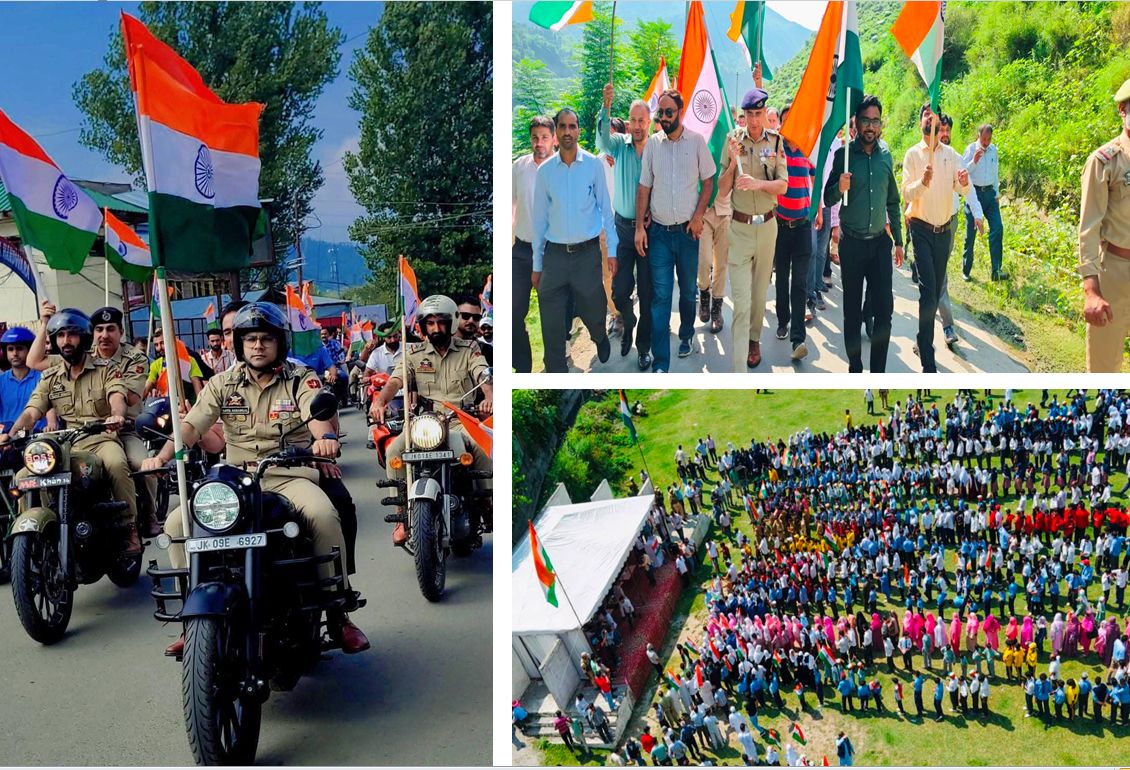
Today, the campaign has created a striking visual and emotional landscape across Jammu and Kashmir. Massive 108-feet-tall flags have been erected in several districts, serving as permanent monuments of patriotism that are visible day and night. The flag is no longer a rare sight but a daily presence fluttering proudly in homes, shops, vehicles, and even boats on Dal Lake. Young Kashmiris actively participate by sharing images and videos of themselves with the Tiranga at mountain peaks, lakesides, and heritage sites, making the celebration both physical and digital.
This shift is particularly significant for the younger generation, many of whom grew up amid violence and propaganda that suppressed national identity. Today, these youth embrace the flag openly and proudly, from displaying it on social media to participating in public rallies and cultural events. Educational institutions hold week-long programs leading up to Independence Day, including debates, essay competitions, cultural performances, and sports events, all centered around national pride and unity.
The Lal Chowk clock tower, once a politically contested site, now hosts the national flag in a public ceremony attended by thousands. This change signals that the people of Kashmir, not just the army or officials, are reclaiming the national narrative and celebrating their place within India. The campaign has helped normalize patriotism and redefine public spaces, making the flag a symbol of hope, peace, and progress rather than fear and division.
The emotional impact of the HarGharTiranga campaign is profound. In many homes, children start their day by singing the national anthem and patriotic songs, underscoring a new era of national awareness. The campaign has fostered a sense of unity that transcends past divisions, encouraging Kashmiris to see themselves as part of the larger Indian nation. This growing loyalty is reflected in the enthusiastic participation of people from all walks of life—schoolchildren, women, elders, and community groups- in flag-hoisting ceremonies and national celebrations.
The campaign’s success lies in its ability to make the flag a daily, lived experience rather than an occasional symbol. By promoting the flag’s constant presence, the initiative nurtures pride and belonging, replacing decades of alienation, misinformation, and radicalization. Kashmir’s youth are reclaiming their voice and identity, no longer influenced by divisive narratives but guided by a renewed understanding of their place in India.
HarGharTiranga also sends a strong message against violence and extremism. The abrogation of Article 370 dismantled many structures that had allowed violence to persist. The campaign reflects a collective commitment to peace, stability, and development. Public spaces decorated with the national flag and national anthem celebrations symbolize a break from past violence and a hopeful vision for the future.
Importantly, the campaign has brought together diverse communities in Kashmir, bridging cultural, religious, and linguistic divides. National Days now serve as occasions to reinforce democratic values, freedoms, and inclusivity. Participation in these events strengthens the bond between Kashmir and the rest of India, underscoring the region’s integral role in the world’s largest democracy.
The campaign’s influence extends beyond symbolism. It fosters a sense of responsibility among citizens to uphold the values the flag represents. The towering flags in public squares and government buildings serve as constant reminders of the sacrifices made by martyrs, including armed forces personnel, for the nation’s unity and integrity. Through peaceful celebrations and public displays of patriotism, Kashmiris express their commitment to coexistence and nation-building.
The HarGharTiranga campaign has thus become more than a government initiative; it is a grassroots movement embraced by the people of Kashmir with pride and honour. It represents a historic break from decades of fear and alienation, offering a hopeful path toward inclusiveness, peace, and prosperity. The campaign’s impact is evident in the renewed enthusiasm for Independence Day celebrations that now resemble those of the pre-1990 era, marked by widespread participation and community spirit.
The HarGharTiranga campaign has significantly transformed the national day experience in Jammu and Kashmir. It has reintroduced the Indian flag into public life, nurtured patriotism among youth, and helped reclaim spaces once dominated by conflict. The campaign symbolizes peace, unity, and national integrity and stands as a testament to Kashmir’s evolving identity within India. This renewed celebration of the flag is both a tribute to past sacrifices and a beacon of hope for a more inclusive, peaceful future.
(The author can be reached at fidafirdous8@gmail.com)