

Irshad Mushtaq
Parents across Kashmir work hard for their children. They pay school fees, buy warm clothes, and try to provide good food and a comfortable life.
But children also need something that money alone cannot provide: love, attention, and a home where they feel safe.
Can your child tell you about a mistake without being insulted? Can they share a fear without being laughed at? Can they ask for help without being shouted at?
The World Health Organization (WHO), the United Nations health agency, supports parenting programmes that help adults reduce harsh treatment, build better relationships and manage some children’s emotional and behaviour problems.
Teach the child—do not break their confidence
Children need rules. They must learn not to hit, lie, or hurt others. But correcting a mistake does not require insulting the child.
Instead of saying, “You are useless,” say, “This was wrong. Let us put it right.”
Instead of saying, “You never learn,” say, “You need more practice. Let us try again.”
WHO reports that physical punishment, such as hitting or slapping, is linked with more aggressive behaviour, worry, sadness, low confidence, and difficulties at school.
The purpose of discipline—teaching children how to behave—should be learning, not fear.
Love does not mean saying yes to everything
Parents can be loving and still set firm rules.
You can say:
“You may feel angry, but you cannot hit.”
“You can disagree, but you must speak respectfully.”
“You made a mess. Please help clean it.”
This is positive parenting: raising children with care, clear rules, and respectful guidance.
UNICEF, the United Nations Children’s Fund, supports this approach. Children need affection, but they also need adults to explain limits and apply them fairly.
Do not tease children about their weaknesses
A child’s marks, appearance, speech, or fears should not become a joke before relatives or visitors.
Avoid saying, “Look at your cousin. Why can you not be like him?”
Try saying, “Which part is difficult? Let us work on it.”
Speak privately about sensitive concerns. Listen before deciding what happened.
UNICEF explains that positive parenting can improve self-esteem, which means how much a person values and believes in themselves. Giving children space to discuss their thoughts and feelings is part of this approach.
Give time, not only gifts
A child does not always need an expensive toy. Sometimes they need a parent who puts the phone aside and listens.
Tell a Kashmiri story. Read together in a familiar language. Play a simple game. Ask about school.
UNICEF identifies talking, storytelling, reading, and play as useful support for children’s learning and growth. These activities do not have to be expensive.
A simple question can help: “What made you happy today, and what worried you?”
A POSITIVE HOME HELPS CHILDREN GROW
A positive home does not mean that nobody ever becomes angry. It means adults try to handle problems without violence, insults, or humiliation—making someone feel ashamed or worthless.
A caring home can help children develop:
Confidence: feeling able to speak, ask questions, and try.
Resilience: learning to cope with difficulties and try again.
Responsibility: understanding duties and taking care of their actions.
Respect: learning to listen and treat others fairly.
UNICEF highlights safe surroundings, caring relationships and clear guidance as important support for children’s growth. These things help children, but they cannot guarantee perfect marks or a life without difficulties.
Keep children out of adult fights
Adults may disagree about money, work, property, or family matters. Children should not be made responsible for these disputes.
Make these household rules:
Do not ask a child to choose between parents.
Do not use children to carry angry messages.
Do not ask them to settle problems between elders.
Do not blame them for adult difficulties.
Explain necessary changes simply, without frightening details.
You can say: “The adults are working on this problem. It is not your fault, and you do not have to solve it.”
These are practical ways to build the caring, less harsh family relationships encouraged by WHO guidance.
Government figures: healthcare can affect family savings
Children’s health matters because they deserve care. Illness can also put pressure on a family’s budget.
The Government of India’s National Health Accounts (NHA)—a report on healthcare spending—provide these figures:
The figures show that the household share fell, but families still paid a substantial part of the country’s healthcare costs directly.
This direct spending is called out-of-pocket expenditure (OOPE).
These figures need careful explanation:
They are for India, not Kashmir alone.
They cover healthcare generally, not only children’s mental health.
6,602 is an average, not every person’s medical bill.
They do not measure the cost of harsh parenting or family fights in Kashmir.
Government data should help families understand the issue—not support claims the numbers cannot prove.
The cost can go beyond the doctor’s bill
When planning for illness, families can consider possible spending on treatment, medicines and travel, along with time away from work.
WHO’s India mental-health page reports estimated economic losses—losses affecting the wider economy—of US$1.03 trillion linked with mental-health conditions over 2012–2030. This is a WHO estimate, not an Indian government figure. It is not an annual loss, a Kashmir-only figure, or a loss caused by parenting alone.
We should take health seriously without putting a price on a child’s suffering or promising that loving parenting will remove every medical expense.
Love helps, but it does not replace treatment
Not every childhood difficulty is caused by parenting. A child can need professional care even in a loving home.
Hypertension means high blood pressure. It is different from hyperactivity, which means unusually high activity or difficulty staying still. High blood-pressure readings in children need medical checks and proper follow-up.
Parenting support can help relationships and some emotional or behaviour difficulties. It is not a cure for every illness.
Families can also explore Tele-MANAS, a national mental-health support service under the Ministry of Health and Family Welfare. MANAS stands for Mental Health Assistance and Networking Across States. Ask what support and further services are available for the child’s needs.
Every adult in the home has a role
A peaceful home is not only a mother’s responsibility. Fathers, grandparents and other caregivers should also support clear, respectful family rules.
Make time for conversation. Notice effort. Share activities. Correct mistakes without insulting the child.
These everyday actions reflect UNICEF’s guidance on caring parenting. The aim is not perfect parenting; it is to recognise harmful habits and work to change them.
Conclusion: save for their future—and give them peace today
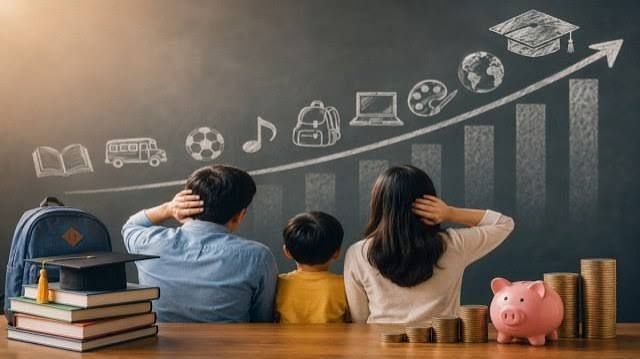
Kashmir’s children need education, healthcare and financial support. They also need adults who listen, explain and guide.
A poor result should lead to help, not humiliation. A mistake should become a lesson, not a permanent label. An adult dispute should remain an adult responsibility.
Government figures show that healthcare remains a financial concern for families. WHO warns about harsh punishment, while UNICEF explains the value of caring relationships and safe surroundings. The message is clear: protect children’s dignity, reduce avoidable harm, and seek help when needed.
Let our promise be simple:
“We will correct our children without insulting them. We will set rules without violence. We will listen without laughing at their worries. We will seek help without shame.”
Saving money for tomorrow matters. Giving children a loving home today matters too.