

Irshad Mushtaq
A child chasing a football, learning to cycle, or taking a swimming lesson is doing more than enjoying free time. That child is developing strength, coordination and confidence. Regular physical activity also supports attention, memory, emotional well-being and heart health. Play deserves recognition as part of healthy development—not merely a reward after homework.
For Kashmir, the challenge is not to produce a professional athlete in every household. It is to ensure that every child has an opportunity to move safely and enjoy an active childhood.
The guiding principle is balance: technology, studies and organised coaching should not crowd out movement, sleep and simple play.
THE NATIONAL HEALTH WARNING
India’s National Family Health Survey, commonly abbreviated as NFHS, offers a warning. Government figures show that the proportion of children under five classified as overweight increased from 2.1% in NFHS-4, conducted in 2015–16, to 3.4% in NFHS-5, conducted in 2019–21. Here, overweight means weight that is high for a child’s height.
These are national figures, not Kashmir-specific estimates. They do not prove that phones caused the increase. They nevertheless underline why healthy routines deserve attention early.
The World Health Organization, or WHO, recommends regular activity, adequate sleep and less sedentary time. “Sedentary” means waking time spent sitting or reclining with little movement.
MOVEMENT SUPPORTS THE BODY AND BRAIN
Running, jumping, and climbing strengthen muscles and bones. Energetic games improve cardiovascular fitness—the ability of the heart and lungs to support physical effort. Activity also supports a healthier body weight and blood-sugar regulation.
The benefits extend beyond fitness. Physical activity can improve attention and memory, support academic performance and sleep, and help reduce symptoms of anxiety and depression. It does not guarantee better marks or replace professional mental-health care.
Group games provide opportunities to practise cooperation, patience and following rules. These benefits depend on supportive adults and age-appropriate expectations, rather than constant pressure to win.
HOW MUCH ACTIVITY IS ENOUGH?
WHO recommends:
Ages one to two: at least 180 minutes of varied activity throughout the day.
Ages three to four: at least 180 minutes, including 60 minutes of more energetic movement.
Ages five to seventeen: an average of at least 60 minutes daily of moderate-to-vigorous activity across the week, mostly aerobic, with vigorous and muscle- and bone-strengthening activities at least three days weekly.
These targets do not mean hours of exhausting training. Walking, dancing and active games count. “Aerobic” activity makes the heart and breathing work harder; moderate-to-vigorous activity includes brisk walking, running and energetic cycling.
CRICKET AND FOOTBALL: FUN BEFORE SELECTION
Young children need basic movement skills before complicated tactics. Most under-six children are better suited to kicking, throwing, catching and running than organised competitive sport. From around six, many are ready for structured games with smaller teams, suitable equipment and flexible rules.
Parents should judge coaching by participation and enjoyment, not trophies alone. Schools and academies could offer competitive and recreational pathways. A child excluded from a tournament should not lose access to play.
For cricket, sessions could include active drills rather than prolonged waiting. For football, smaller games could give more children opportunities to participate.
CYCLING: READINESS BEFORE SPEED
The American Academy of Pediatrics, abbreviated as AAP, advises against pushing children onto conventional two-wheeled bicycles before they are ready—often around five or six. This is guidance, not a deadline.
A bicycle should fit the child now, not be oversized for future use. A correctly fitted helmet belongs on every ride, and beginners need supervised practice away from traffic. Pedalling confidently does not mean a child can judge road hazards safely.
Approved school grounds or enclosed community spaces could host cycling-skills sessions focused on balance, braking and control.
SWIMMING: A LIFE SKILL, NOT A SAFETY GUARANTEE
AAP guidance says swimming lessons may begin after the first birthday for developmentally ready children. By around four, most are ready to learn basic skills. Readiness depends on development and comfort, not age alone.
Lessons never make a child “drown-proof.” Infants, toddlers, and weak swimmers require an adult within arm’s reach in the water. Supervision must be continuous and free from phone distractions.
Qualified instruction, lifeguards, pool barriers, and appropriate life jackets provide separate layers of protection. Caregivers should consider learning cardiopulmonary resuscitation, or CPR—an emergency procedure used when breathing or the heartbeat stops.
Beginners should learn in properly managed facilities, not unsupervised open water.
LESS SCROLLING NEEDS A REAL ALTERNATIVE
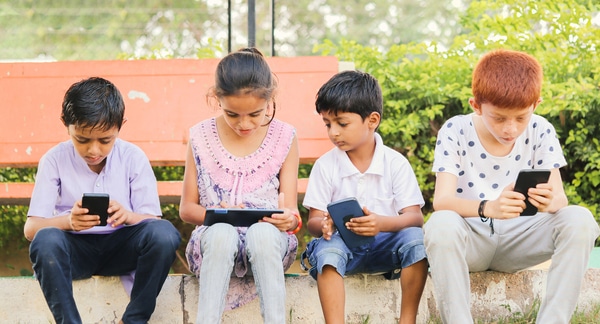
Taking away a phone without offering anything else may create conflict rather than a healthier routine.
Families could schedule walks, ball games, or supervised cycling. Adults can participate instead of only issuing instructions.
WHO recommends no sedentary screen time for infants and one-year-olds. For children aged two to four, it recommends no more than one hour daily; less is better. Reading and storytelling remain valuable quiet activities.
For older children, recreational screens should not displace movement and sleep. The aim is thoughtful use of technology, not its complete rejection.
A PRACTICAL PLAY PLAN FOR KASHMIR
Kashmir needs year-round options. During safe outdoor conditions, families can choose walking, playground games and cycling. When conditions are unsuitable, schools and communities could arrange supervised indoor dance, movement games and age-appropriate exercise.
A neighbourhood play hour could use an authorised ground with responsible supervision. Shared equipment banks could reduce costs. Where feasible, schools could explore opening suitable grounds after classes.
These are proposals, not claims that facilities already exist. Permissions, safe spaces, maintenance and emergency arrangements would be essential.
INCLUDE EVERY CHILD
Girls, children with disabilities and less-confident participants must not become an afterthought.
Programmes could offer accessible spaces, suitable timings, adapted activities and appropriately trained staff. Dedicated girls’ sessions could be considered where helpful, without limiting wider opportunities.
WHO’s recommendations include children living with disabilities, with activity adapted to individual abilities and circumstances.
Participation should mean meaningful involvement—not simply being present while others play.
SCHOOLS AND PARENTS MUST WORK TOGETHER
The Government of India’s Fit India Movement promotes active lifestyles. Its School Week initiative brings fitness into school life through collaboration between the sports and education departments.
Schools could protect physical education periods, introduce short movement breaks, and provide regular activities beyond annual sports day. Parents can support these efforts by praising effort rather than demanding medals.
The better measure is not how many trophies a school wins, but how many children regularly participate.
CONCLUSION: PROTECT THE RIGHT TO PLAY
Kashmir’s children need digital skills and education. They also need opportunities to move, make friends and discover activities they enjoy.
Health guidance provides clear foundations; local action must make participation practical. Safe spaces, inclusive programmes and encouraging adults matter more than expensive equipment.
We do not need a champion in every home. We need an opportunity to play in every childhood.
(Disclaimer: This article provides general education, not medical advice or an individual exercise prescription. National statistics are not Kashmir-specific findings. Local initiatives described are proposals, not government commitments. Parents should consult a qualified paediatrician when children have medical conditions, disabilities, or exercise-related symptoms. Sports require appropriate instruction, equipment, and supervision. No academy, coach or facility is endorsed.)