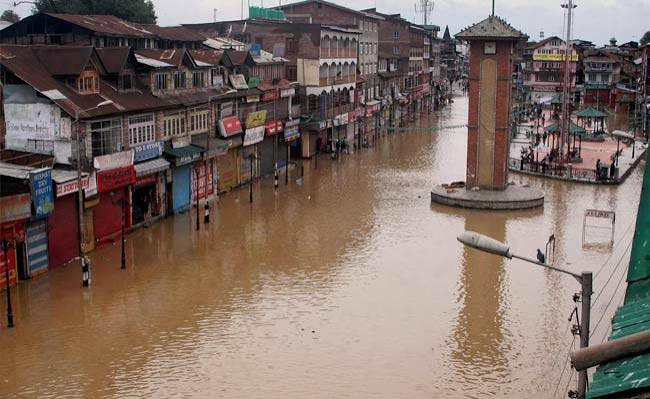
Twelve years have passed since the devastating September 2014 floods shook Srinagar and large parts of Kashmir. The catastrophe disrupted lives, destroyed homes and businesses, damaged infrastructure and exposed serious gaps in disaster preparedness. The 12th anniversary of the deluge passed on September 7, and it should be an occasion to assess how far Kashmir has progressed in flood preparedness and whether the lessons of 2014 have been translated into concrete preventive action. A comprehensive, time-bound flood mitigation and preparedness plan must remain firmly in place to protect lives, livelihoods, businesses and critical infrastructure across the Valley. The administration must adopt a zero-risk approach to disaster preparedness. While completely eliminating natural hazards may not be possible, reducing their impact through advance planning certainly is. The challenge has become more urgent because the weather pattern is changing rapidly. Global warming and climatic variability are increasing the risks associated with intense rainfall, cloudbursts, flash floods and other extreme events. Kashmir’s fragile Himalayan ecology makes the region particularly vulnerable. A recent observation by the Parliamentary Standing Committee on Home Affairs underlines this reality. The Committee noted that Jammu and Kashmir remains exposed to multiple hazards, including floods, landslides, earthquakes, avalanches and Glacial Lake Outburst Floods. The risks also vary across regions. The Kashmir Valley is particularly vulnerable to floods, the Chenab Valley faces serious landslide risks, while parts of the Jammu region fall in high seismic-risk zones. J&K has made important progress in building its disaster management framework. The Disaster Management Plan, first notified in 2017, was revised in 2023 in line with the Union Territory’s administrative structure and the National Disaster Management Plan. District Disaster Management Plans have also been prepared for all 20 districts. Institutional arrangements have been strengthened, while disaster risk reduction is increasingly being incorporated into infrastructure projects. Slope stabilisation and drainage improvements in road, tourism and hydropower projects are positive steps. Yet, such measures must become part of a uniform and mandatory system rather than remaining limited to individual projects. Early warning systems have also improved through the Common Alerting Protocol and integration of alerts from agencies such as the IMD, Central Water Commission and DGRE. The real test, however, is last-mile delivery. Alerts are useful only when they reach people in time and in a form they can understand and act upon. Remote and vulnerable districts, including Kishtwar, Kupwara and Bandipora, require particular attention. Response capacity through SDRF battalions, NDRF deployment, Army coordination and pre-positioning of resources is equally important. Community preparedness must receive the same priority. Initiatives such as Aapda Mitra, Aapda Sakhi and disaster management committees at Panchayat and Block levels can make communities the first line of defence. Kashmir cannot afford complacency. The memory of 2014 must remain a guide for future action. Preparedness should be continuous, infrastructure resilient and coordination seamless. The goal must be clear: when the next extreme weather event strikes, Kashmir should be ready to respond swiftly, protect its people and prevent a natural hazard from becoming another humanitarian catastrophe.
Flood Lessons