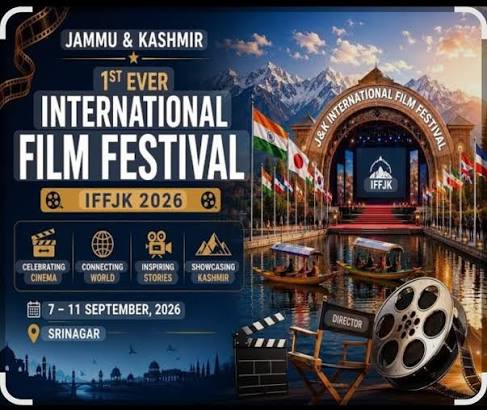
As the countdown enters its final days, excitement is building around the first International Film Festival of Jammu and Kashmir. The four-day festival, scheduled for September 7 to 10, promises to be an important moment for the union territory. It is also an opportunity to test whether Kashmir can once again become a serious destination for cinema. It is no secret that Kashmir was once a favourite destination for Bollywood, and the festival could help the Valley reclaim that place in the film industry. The scale of the event is significant. A total of 135 films from 41 countries are expected to be screened. India has the largest share, with 64 films. France and Iran follow with 13 and eight films respectively. Several other countries will also be represented. The festival will include competitions, masterclasses, cultural performances and industry interactions. A floating screen on Dal Lake will add a distinctive local setting to the programme. It could become one of the festival’s most memorable features and attract both locals and tourists. The prize purse is equally notable. A total of ₹96 lakh has been set aside across nine categories. The Best Film award carries ₹25 lakh. Other major awards will recognise direction, debut filmmaking, acting, cinematography, sound design and editing. A dedicated J&K Select category also offers a substantial prize. For local filmmakers, this is a chance to meet established professionals. It is a chance to learn, collaborate and build relationships. Young creators need access to producers, distributors, technicians and mentors. A festival can provide that access in ways that ordinary filmmaking opportunities cannot. The event can also help change perceptions of Kashmir. For years, the region’s cinematic identity has been closely associated with its landscapes. That is no longer enough. Kashmir must be presented as a place with skilled crews, capable technicians, creative talent and the infrastructure needed for modern productions. A successful festival can help create that confidence. Film production also has a wider economic impact. Shooting projects generate work for drivers, hotels, restaurants, technicians, artists, equipment suppliers and many other local businesses. More productions can therefore mean more employment and greater activity across several sectors. But one festival cannot transform an industry on its own. The greater challenge will be continuity. The administration has indicated that IFFJK is intended to become an annual event. That ambition deserves serious support. The festival should not become a one-time spectacle. It should grow through consistent promotion, professional organisation, strong programming and meaningful industry participation. The masterclasses are particularly important. They can give students and aspiring filmmakers practical exposure. Workshops and technical sessions can help bridge the gap between talent and opportunity. The festival must also remain inclusive. International participation should be matched by meaningful space for local voices. Kashmir’s filmmakers should not merely be an audience. They should be participants, competitors, collaborators and storytellers. If that balance is achieved, IFFJK can become more than a cultural celebration. It can become a bridge between Kashmir and the wider film world.
Film Frontier