

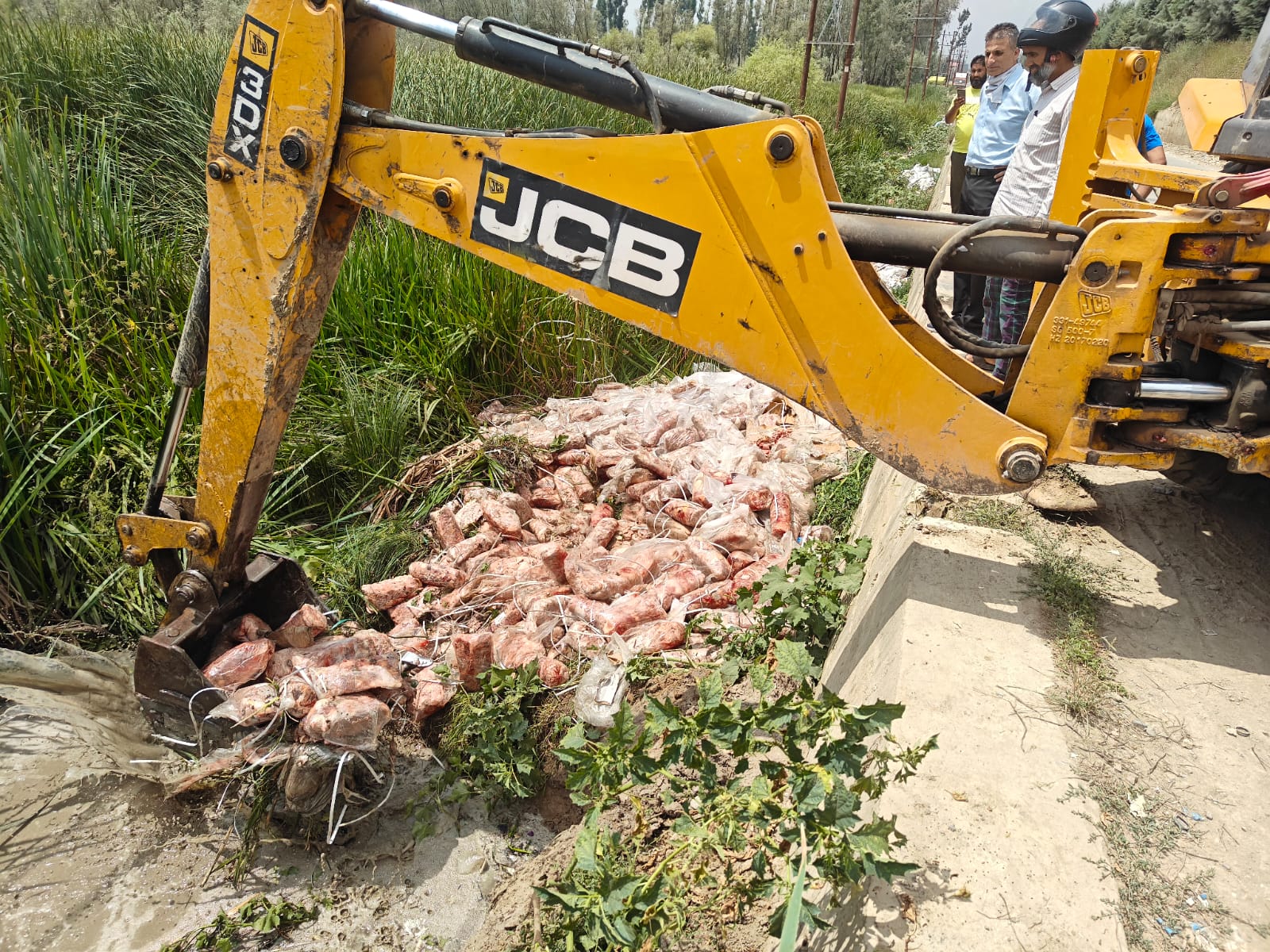
Srinagar, Aug 13: Call it fallout of the putrefied meat scandal, Kashmir’s restaurant industry has taken a huge hit with all facilities witnessing almost zero customers.
President of the Restaurant Association of Kashmir (RAK), Sheikh Feroz, said almost the entire sector has been hit hard by the scandal, which has eroded consumer trust across the board.
“Most restaurants are in a struggling situation. This is very unfortunate, and even the establishments that have maintained quality for years are now suffering. Right now, the situation is such that almost 100 percent of restaurants are affected,” Feroz told The Kashmir Monitor.
Feroz said the incident has created a “trust deficit” among diners, with many avoiding eating out altogether.
Calling for urgent corrective measures, Feroz stressed the need for strict adherence to hygiene protocols and responsible sourcing. “Restaurants need to maintain hygiene in kitchens and procure fresh meat from local suppliers only. There must be transparency by abiding by all the rules,” he said.
Meanwhile, a blame game has erupted over the rotten meat scandal.
While the Jammu and Kashmir Hotel and Restaurant Association (JKHRA) alleged that roadside dhabas are primarily responsible for selling rotten meat products to unsuspecting customers, local eateries have called the allegation preposterous.
Babar Chaudhary, president of JKHRA, told The Kashmir Monitor that a meeting of members was convened to address the growing public concern about the restaurants.
“We held a meeting with the concerned minister and assured that member restaurants will make their meat procurement lists public. It is the C-grade dhabas and roadside eateries that are the main customers for this kind of meat,” he said.
The association has urged the government to introduce a licensing system for roadside vendors and to cancel licenses of those found guilty of serving unhygienic food. “Mostly the Grade ‘A’, ‘B’ restaurants are being constantly inspected by the government. They take the samples to check the quality of the meat and the products. We have appealed to the government that a similar mechanism should be in place for Grade ‘C’ dhabas and roadside eateries,” he said.
Chaudhary also appealed to the public to remain vigilant about suspiciously low food prices.
“If mutton costs ₹700 per kg with bone and ₹1,000 without bone, how can its products be sold so cheap? People should think. It’s not possible to serve four mutton ristas for ₹100,” he said.
Small eateries and food outlets, however, hit back, accusing many restaurants of buying the same meat. “Small eatery shops also prepare food in front of the customers, who know about its hygiene. The buyers of low-quality imported meat are minuscule. Even some of the restaurants that sell boneless fish, chicken also buy the imported meat,” said Sajad Ahmad Khan, a small food outlet owner.
Several restaurant owners said the crackdown has severely hurt business despite their adherence to food safety norms. “It’s been a week, and very few customers have come to eat here. We even have videos to prove the source of our meat, but people don’t believe us,” said Muneer Ahmad, a Srinagar-based restaurant owner.
The crackdown has triggered panic among residents and led to a steep decline in restaurant footfall. “ I have stopped going to restaurants for food now. We don’t trust what is being served to us. It is better to bring the meat home and cook it hygienically,” said Suheem Ahmad Bhat, a student.