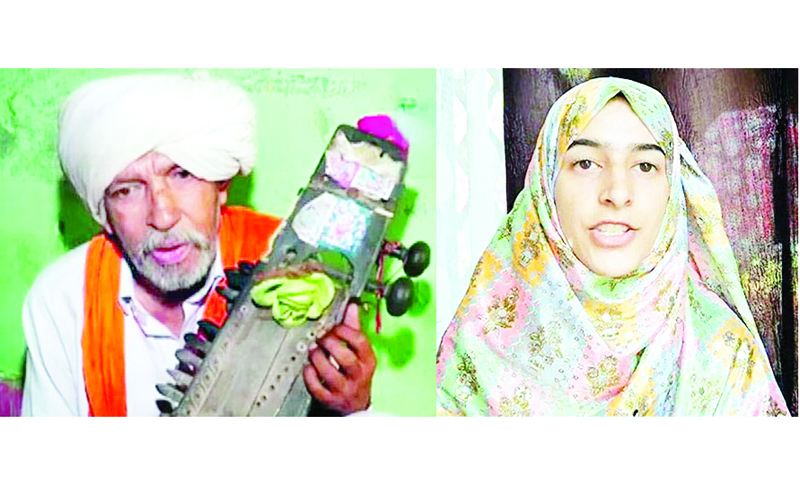
The mention of Gauri Nath, a sarangi player/ singer from Udhampur, and Firdousa Bashir, a calligrapher from Anantnag, in Prime Minister Narendra Modi’s radio address ‘Mann Ki Baat’ on Sunday has caught the attention of all. Gauri Nath’s journey as a sarangi player is a story of cultural preservation that is rooted in the Dogra heritage of Udhampur. Nath’s instrument holds profound historical value and has become a symbol of the Dogra community’s rich musical legacy. Nath is known for recounting ancient stories and historical events through sarangi melodies. His work, as highlighted by the Prime Minister, emphasises the need for younger generations to appreciate and carry forward this legacy. The PM’s mention not only celebrates Nath’s efforts but also inspires others to preserve and promote regional music. In Anantnag, Firdousa Bashir’s work in calligraphy too has been appreciated. As Modi remarked, Bashir’s work resonates particularly with the youth in her community for its aesthetic appeal. Her passion for calligraphy began after her schooling, when she developed an interest in the Arabic script, a key element in Islamic and Kashmiri art. Through calligraphy, Bashir not only produces beautiful handwriting but also connects her community with the rich Islamic literary traditions that have been part of Kashmir’s Muslim history. Her recognition in ‘Mann Ki Baat’ has inspired both her and her community. It will also encourage young people to explore calligraphy and other local arts. Bashir’s story exemplifies how an individual’s dedication to their craft can reignite interest in cultural heritage among new generations. This effort is particularly relevant in Kashmir, where traditional crafts have faced challenges due to economic changes and the impact of modernisation. By choosing to focus on a traditional art form, Bashir is helping to keep the legacy of Kashmiri calligraphy alive. By doing so, she is paving the way for its integration into modern artistic expressions. The Prime Minister’s acknowledgment of Nath and Bashir’s work is an example of government support in promoting local arts. Modi is advocating for the value of regional crafts in India’s broader cultural landscape by highlighting these artists. This type of recognition helps increase visibility for these art forms, giving them a platform to reach national and even international audiences. Through programs like ‘Mann Ki Baat’, regional artists gain encouragement to continue their work and see their cultural contributions as part of India’s rich diversity. India’s government initiatives, such as ‘Fit India’ and celebrations for historic figures like Sardar Vallabhbhai Patel and Bhagwan Birsa Munda, parallel these cultural efforts. By celebrating the importance of unity and fitness, as seen in events like Yoga Day and marathons, the government also emphasises holistic development, which includes physical, cultural, and spiritual well-being. Now, the inclusion of Gauri Nath and Firdousa Bashir in ‘Mann Ki Baat’ proves how individual artists play a vital role in preserving and sharing regional heritage. Nath’s sarangi performances and Bashir’s calligraphy remind us that local traditions and art forms are essential threads in the fabric of national identity.
Cultural Custodians