

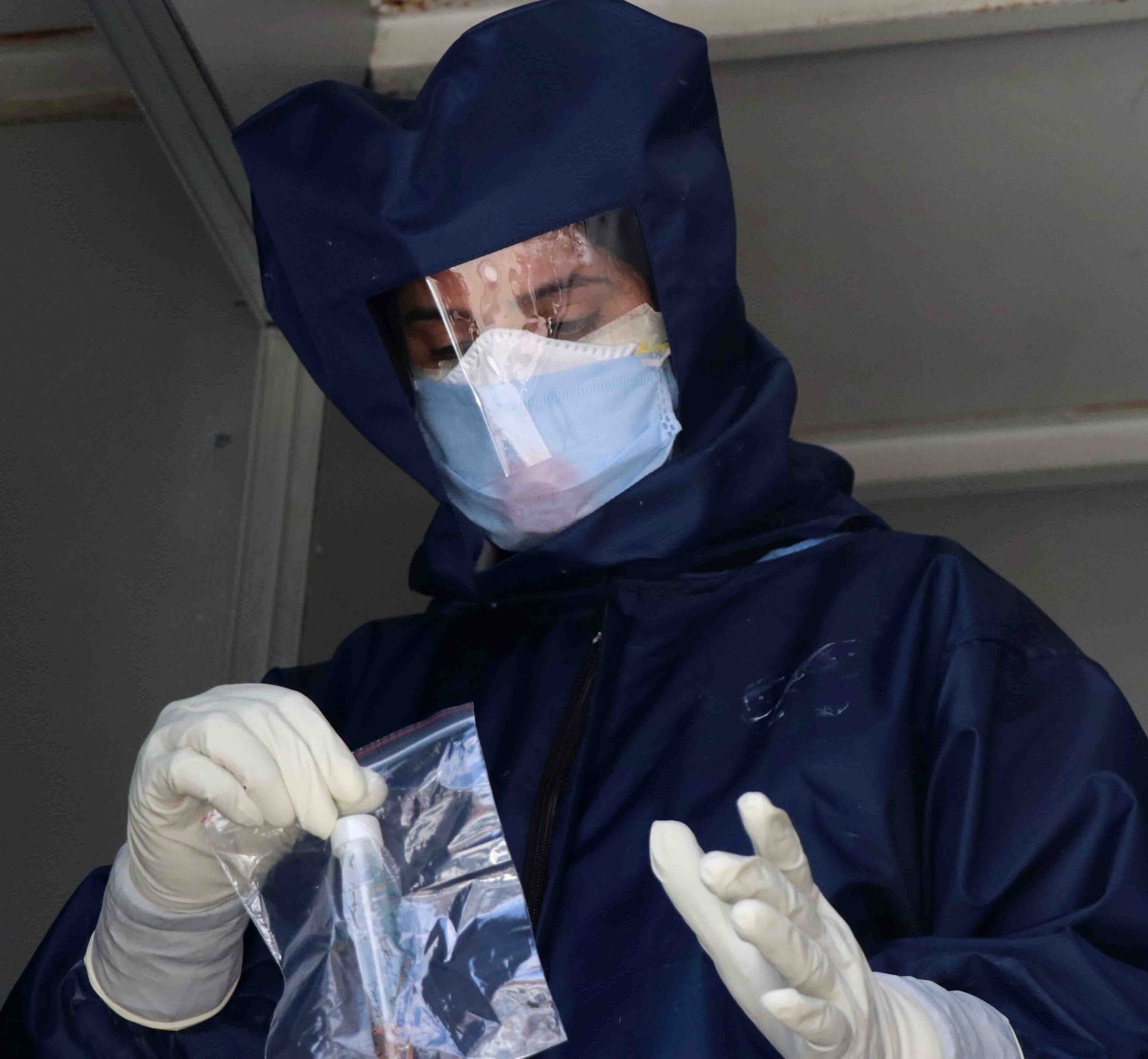
Hundreds of scientists say there is evidence that novel coronavirus in smaller particles in the air can infect people and are calling for the World Health Organization to revise recommendations, the New York Times had reported.
The WHO has said the coronavirus disease spreads primarily from person to person through small droplets from the nose or mouth, which are expelled when a person with COVID-19 coughs, sneezes or speaks.
In an open letter to the agency, which the researchers plan to publish in a scientific journal next week, 239 scientists in 32 countries outlined the evidence showing smaller particles can infect people, the NYT said.
The WHO did not immediately respond to a request for comment from Reuters.
Whether carried by large droplets that zoom through the air after a sneeze, or by much smaller exhaled droplets that may glide the length of a room, the coronavirus is borne through air and can infect people when inhaled, the scientists said, according to the NYT.
However, the health agency said the evidence for the virus being airborne was not convincing, according to the NYT.
“Especially in the last couple of months, we have been stating several times that we consider airborne transmission as possible but certainly not supported by solid or even clear evidence,” Dr. Benedetta Allegranzi, the WHO’s technical lead of infection prevention and control, was quoted as saying by the NYT.