

Sheikh Nazir Mehdi
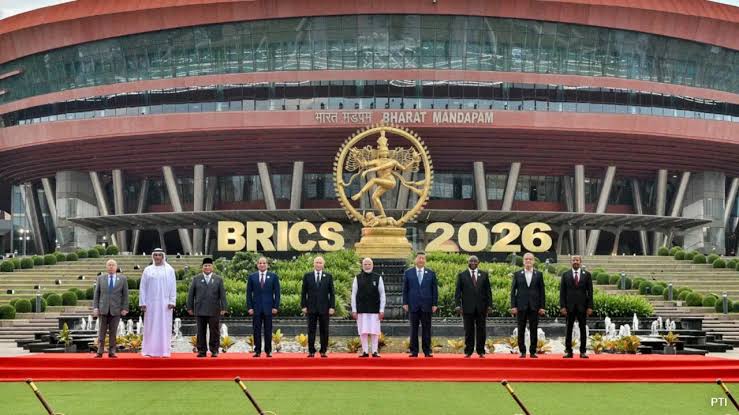
The 18th BRICS Summit, held in New Delhi on 12 and 13 September 2026, has given fresh importance to a grouping that has grown far beyond its original identity. Under India’s fourth chairship, leaders from 11 member countries and 10 partner nations came together at a time when the world is passing through deep geopolitical tensions, economic uncertainty and rapid technological change.BRICS began in 2001 as the term BRIC, coined by economist Jim O’Neill to describe Brazil, Russia, India and China. What started as an economic description soon became a political platform. The first summit was held in 2009 in Yekaterinburg, Russia, and South Africa joined the following year, giving the grouping its present name, BRICS. Since then, the organisation has changed dramatically. Egypt, Ethiopia, Iran, Saudi Arabia and the United Arab Emirates joined in 2024, followed by Indonesia in 2025. Today, BRICS represents nearly half of the world’s population and accounts for around 40 percent of global economic output and roughly 26 percent of world trade. Its growing membership has also made it a broad reflection of the aspirations of the Global South.
For India, the 2026 presidency came at an important moment. The grouping is larger than ever, while conflicts in the Middle East and Ukraine, disruptions in global supply chains and growing protectionism continue to challenge international cooperation. India chose the theme “Building for Resilience, Innovation, Cooperation and Sustainability”, placing people and practical cooperation at the heart of its agenda. During the year, India hosted more than 350 meetings across over 25 cities. Discussions covered agriculture, health, technology, digital infrastructure, trade, finance, energy and urban development. The emphasis was not simply on diplomatic statements but on areas that could have a direct impact on ordinary people.
One of the major achievements of the summit was the unanimous adoption of the New Delhi Declaration. Covering a wide range of global and developmental issues, the declaration called for a more representative international system and greater reform of global institutions. It also stressed the protection of civilians, dialogue for resolving conflicts, and stronger action against terrorism and terrorist financing. The summit also showed that BRICS is still capable of finding common ground despite big differences among its members. On issues such as the Middle East and Ukraine, countries do not always share the same political position. Yet they managed to agree on several broad principles and keep the focus on dialogue, stability and cooperation. The practical agenda was equally significant. In agriculture, BRICS countries moved towards cooperation in agroecology, digital agriculture and agricultural inputs. In health, the grouping promoted healthier lifestyles, traditional and complementary medicine and greater attention to mental health. Technology received a strong push through cooperation among startups, incubators, investors and researchers. Small businesses were also brought into the picture through proposed cooperation platforms for MSMEs, while customs and logistics initiatives aimed to make trade easier and supply chains more resilient. Energy cooperation included work on smart grids and energy storage, while the BRICS Urban Mobility Hub focused on sustainable transport and climate-resilient cities.
The summit did not create a common BRICS currency, as is sometimes suggested in public discussions. Instead, members supported continued efforts to improve the connection between national payment systems and increase the use of local currencies in cross-border trade. India’s approach has been particularly important because it has sought to keep BRICS from becoming simply an anti-Western platform. New Delhi has instead presented it as a bridge through which developing and emerging economies can have a stronger voice in global decision-making. The objective is not necessarily to replace existing international institutions, but to make them more representative and responsive. The New Development Bank and other BRICS mechanisms already provide the grouping with an institutional foundation. As BRICS expands, its real test will be whether these institutions and new initiatives can translate political understanding into meaningful results on the ground.
The 2026 summit therefore represents more than another diplomatic gathering. It reflects the changing balance of the global economy and the growing confidence of emerging nations. Its success will ultimately be judged not by the number of meetings held or declarations adopted, but by whether cooperation can improve lives, create opportunities and give the Global South a stronger voice. With China scheduled to chair BRICS in 2027, the journey will continue. India has placed resilience, innovation, cooperation and sustainability at the centre of the conversation. The challenge ahead is to turn that vision into lasting action.BRICS is no longer merely an acronym born in an economic report. It has become a significant platform in the changing architecture of the world, and India’s 2026 presidency has sought to make that platform more practical, inclusive and closely connected to the needs of people.
(The author can be reached at sheikhnazirmehdi@gmail.com)