

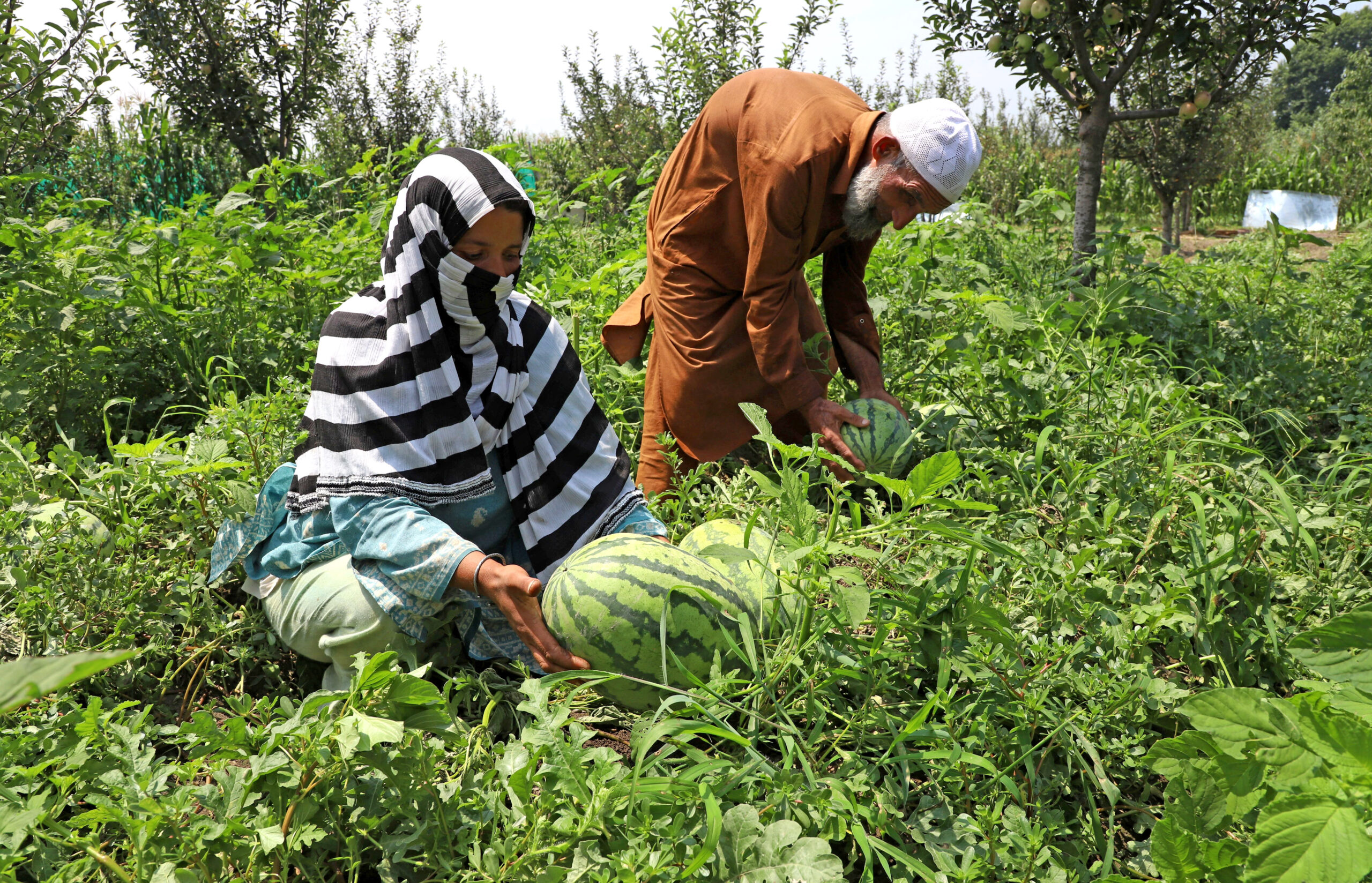
Srinagar, Aug 23: A decade ago, Batwina, a small village nestled along the scenic Sind river in Ganderbal, looked like any other paddy-dependent settlement, its fields awash with rice and its farmers tied to tradition.
Come 2025, it has carved a new identity — Kashmir’s watermelon village.
The transformation began when a handful of farmers decided to experiment with watermelon cultivation on small patches of land, often their kitchen gardens. The gamble paid off spectacularly: the first harvest brought in a bumper yield and set off a quiet revolution in Batwina’s farming landscape.
“We initially converted our kitchen garden into watermelon farms. The results were so good that now a huge area of our agricultural land is under watermelon,” recalls Shabir Ahmad, one of the early adopters of the crop.
The success quickly spread through word of mouth. Encouraged by the profits and the novelty of the fruit in local markets, more and more farmers abandoned parts of their vegetable fields for the new crop. Today, nearly half of Batwina’s cultivable land is dedicated to watermelon farming.
The village’s produce, known for its sweetness and freshness, is consumed largely within Kashmir, feeding the growing local demand during the Autumn months. “Watermelon cultivated in Kashmir gets consumed locally. They are grown in good quantity in Ganderbal and other districts as well. This crop has a huge potential to uplift our farmers,” said Bashir Ahmad Bashir, Chairman Kashmir Valley Fruit Growers-cum-Dealers Union.
For farmers, the shift has meant better returns and more financial stability.
“Watermelon changed our fortunes. It requires less input than paddy, and the income we get is far higher. The only challenge we face is the influx of substandard watermelon from the rest of the Indian states,” said Mubashir Ahmad, another grower.
About 50 hectares in Ganderbal—mainly across Batwina and nearby areas—are now devoted to watermelon cultivation. In recent years, the agriculture department, working with local farmers, has introduced improved hybrid melon varieties, an experiment that has proven largely successful.