

Syed Showket
Pakistan-occupied Jammu and Kashmir (PoJK) has been burning for a long time. The continued reports of human rights violations in PoJK demand the immediate attention of civil society, elected representatives, human rights institutions, and the international community. As people connected by a shared history, culture, and identity, we cannot remain indifferent to credible reports of killings, restrictions on basic rights, violence, arrests, disappearances, communication blockades, and the suppression of peaceful dissent in the region.
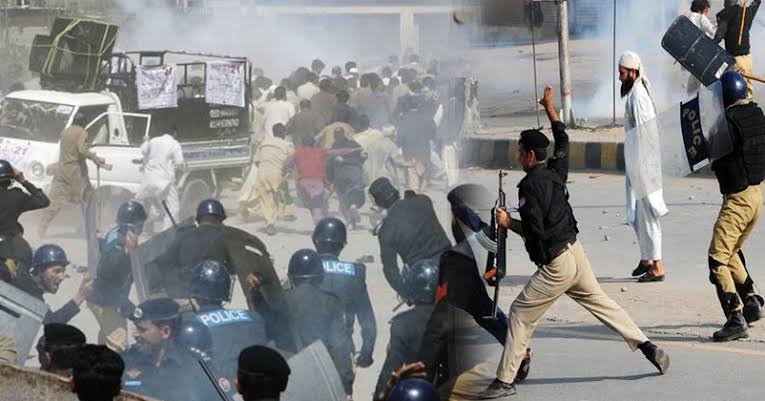
The recent protests in PoJK have brought long-standing political, economic and governance-related grievances into public view. Residents have raised demands concerning economic reforms, political representation, governance and other issues affecting their everyday lives. The response to these protests has generated serious concerns regarding the use of force, arrests, restrictions on communications and the treatment of activists, journalists and protesters.
The most immediate concern is the reported use of force against demonstrators. When citizens take to the streets to express grievances, the responsibility of the authorities is to protect life, maintain public order and facilitate peaceful expression. Allegations of excessive or lethal force, arbitrary detention, enforced disappearances or extrajudicial killings require independent, transparent and credible investigation. No family should be left without answers regarding the fate of a missing relative, and no death during civil unrest should remain without an impartial inquiry.
The prolonged internet and communications blockade has added another serious dimension to the crisis. For more than 100 days, according to reports, residents have faced severe restrictions on digital connectivity. In today’s world, internet access is closely connected with education, healthcare, employment, banking, business, journalism and communication with family members. A prolonged shutdown can therefore affect not only convenience but fundamental aspects of everyday life.
Imagine a student unable to access educational material, an entrepreneur unable to conduct business, a journalist unable to verify information, or a family unable to contact a relative living outside PoJK during a period of unrest. The human cost of a communication blackout cannot be measured only in economic terms. It also creates anxiety, isolation and uncertainty.
There are also concerns regarding freedom of expression and the media. Journalists and civil-society actors must be able to document events without intimidation. Independent reporting is particularly important during periods of conflict or civil unrest because it allows competing claims to be examined and verified. Where access is restricted and communication is blocked, misinformation can spread while genuine grievances can remain invisible.
The concerns extend beyond the immediate protests. Questions have long been raised about political representation, constitutional arrangements, democratic participation, economic opportunities, youth disenfranchisement and the relationship between local institutions and authorities in Pakistan. These issues deserve open public discussion rather than suppression.
Reports and allegations of arbitrary arrests, enforced disappearances, torture, intimidation and extrajudicial killings must not be ignored. Similarly, concerns regarding the rights of minorities, cultural expression, access to resources, employment, healthcare, education and other basic services deserve serious examination. Such allegations should be investigated through credible and independent mechanisms so that facts can be separated from political claims.
As members of Jammu and Kashmir’s civil society, we therefore appeal to elected representatives, human-rights organisations, journalists, academics and international institutions to pay sustained attention to the people of PoJK. The objective should not be to deepen political confrontation, but to ensure that ordinary civilians are protected and their fundamental rights respected.
Our appeal is rooted in humanity and solidarity. The people living in PoJK should not have to sacrifice their basic rights, livelihoods, education, communication and, most tragically, their lives simply for raising political or economic grievances.
Human rights should not depend on geography or political boundaries. The right to life, dignity, peaceful assembly, expression, information and due process belongs to every human being.
We therefore urge the Jammu and Kashmir Legislative Assembly, civil-society organisations, human-rights defenders and the wider international community to take note of the concerns emerging from PoJK and to support credible, peaceful and rights-based mechanisms for addressing them.
The people of PoJK deserve to be heard. Their suffering should not become invisible because the internet is switched off. Their voices should not disappear because journalists are restricted. And their grievances should not be answered with force.
(The author can be reached at vadaiekashmir@gmail.com)