

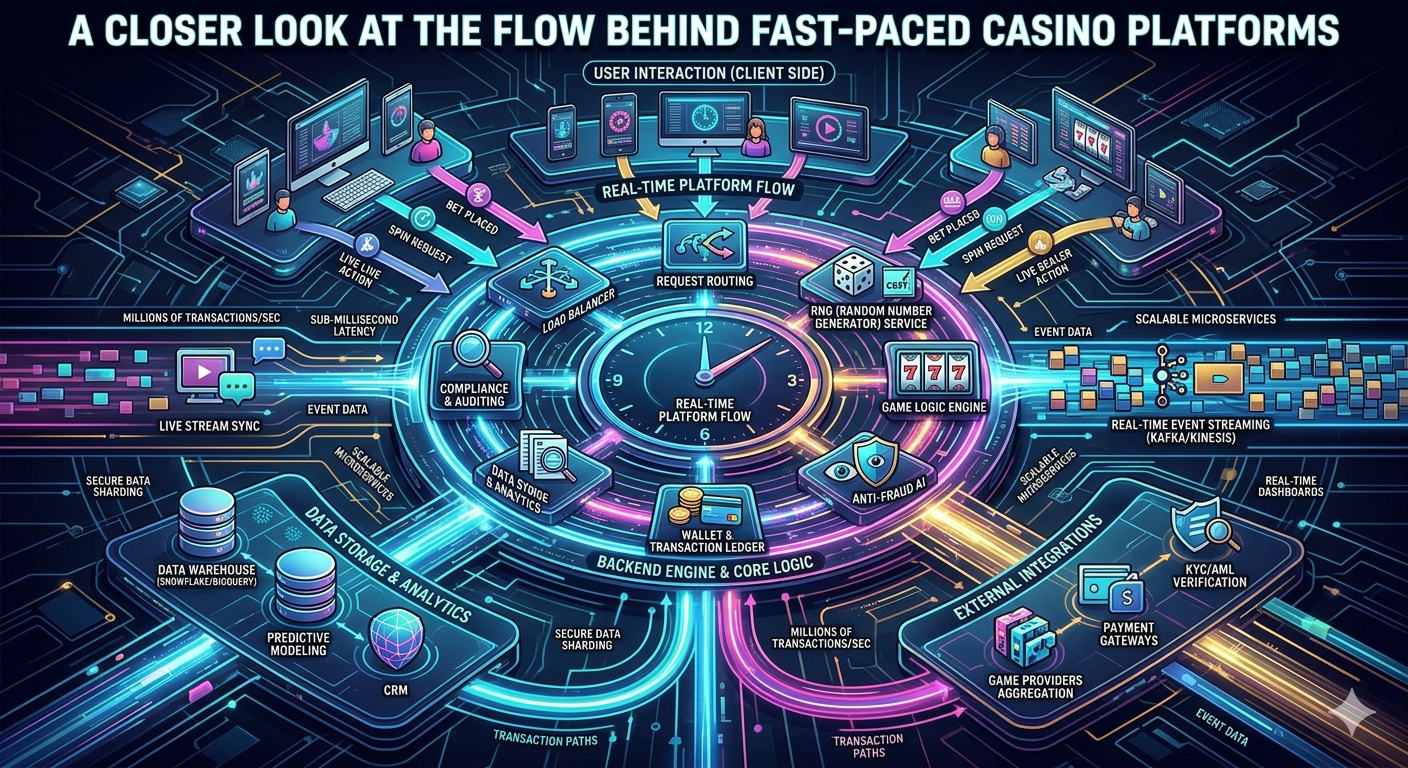
It is immediacy that can make the difference in the attractiveness of online casinos, and this aspect is nearly imperceptible. Players at Betway want to spin the reels easily when they tap, flip cards immediately, and have results resolved smoothly. That instantness is not just a coincidence: it’s created through a stratified set of network architecture, rendering policies, and backend optimization. The system is intricate, and it constantly operates in the background to remove friction, compress response times, and remain continuous between devices and sessions. The following are the aspects that contribute to the near-instant sensation of online casino games.
Edge Computing And Geographic Load Distribution
Contemporary platforms are based on distributed server networks that are located near the players. With the assistance of edge nodes instead of remote centralized servers to route the requests, it saves a lot of latency. The close distance makes the game actions, such as placing bets or spinning reels, travel shorter physical distances, and this saves the response times by milliseconds.
Optimized Game Engines For Low Latency
Casino games are made of highly specialized engines that are lightweight and responsive in nature, as opposed to visual overhead. These engines reduce the number of computations, so actions can be rendered immediately, even on mid-range devices. Tight and predictable input-to-output loops are guaranteed by efficient memory management and lean logic loops.
Asynchronous Data Handling
Many systems are asynchronous in nature, instead of waiting till the server is fully confirmed before results can be displayed. The front end initiates the rendering of animations immediately when validation (back end) is that of the backend. Such separation of visual feedback and data processing gives the impression of zero delay.
Preloading And Asset Streaming
The assets of casino games, including symbols, animations, and sound effects, are loaded during idle time or at the beginning of the game’s loading. Complex implementations can stream assets dynamically, in order of priority of those most likely to be used next. This minimizes real-time fetching, which would otherwise create evident delays.
Persistent Sessions And State Caching
In order to prevent data re-authentication and re-data retrieval, platforms have persistent sessions. Stored player information, including balances, preferences, and last actions, will allow the system to prevent unnecessary database searches. This continuity makes it really easy to go between games or rounds.
Lightweight Communication Protocols
There is a significant reduction of payload between the client and the server because of small message formats in place of large ones and efficient data exchange protocols. There is less traffic, and payload can travel faster because they are done in smaller packets. This is really vital for real-time interactions like live betting or player updates.
How Seamless Design Tricks Your Brain Into Feeling Zero Delay
That feeling that you have of instant play in web-based casinos is not just because of sheer speed, but also because of intentional engineering. It’s designed out of the coordination of distributed infrastructure, an efficient system of rendering, predictive design, and optimization of communication layers. All of them add to the condensing of the space between intention and outcome, which makes it appear as an immediate experience despite having several processes occurring in the background. The technologies that enable such experiences will only become more advanced, as the expectations of the players remain to be more focused on speed and continuity, not only the speed of the response of the games, but also the smoothness of their interaction with human perception.